Leak detection for hidden leaks in San Jose homes
The expensive part of a hidden leak is guessing where it is; we find it first and open the wall or floor once.
- 24/7 answered
- Phelan Ave San Jose office
- Tank, tankless, heat pump
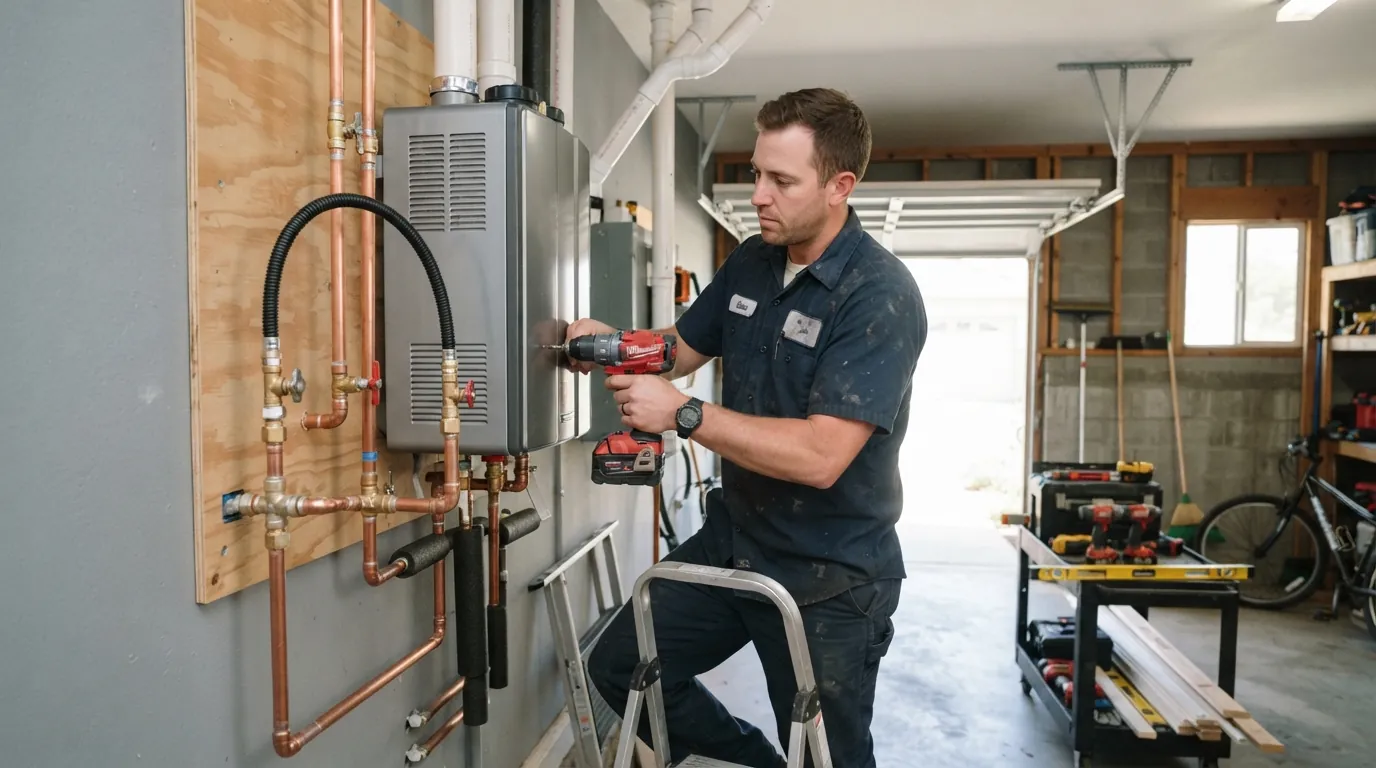
Perfect Tankless Plumbing, San Jose, CA
Leak detection in San Jose confirms a hidden leak with a meter test, isolates it to the hot or cold side or a single branch with pressure tests, then pinpoints it with acoustic listening equipment and a thermal camera, so the wall, floor or yard is opened in one place rather than several.
Updated September 2026
Emergency & Leaks
How we find a leak you cannot see
Hidden leaks are found by elimination. With every fixture off, a moving meter confirms water is escaping somewhere. Closing valves one at a time narrows it to the house or the yard line, hot or cold, and eventually a single branch.
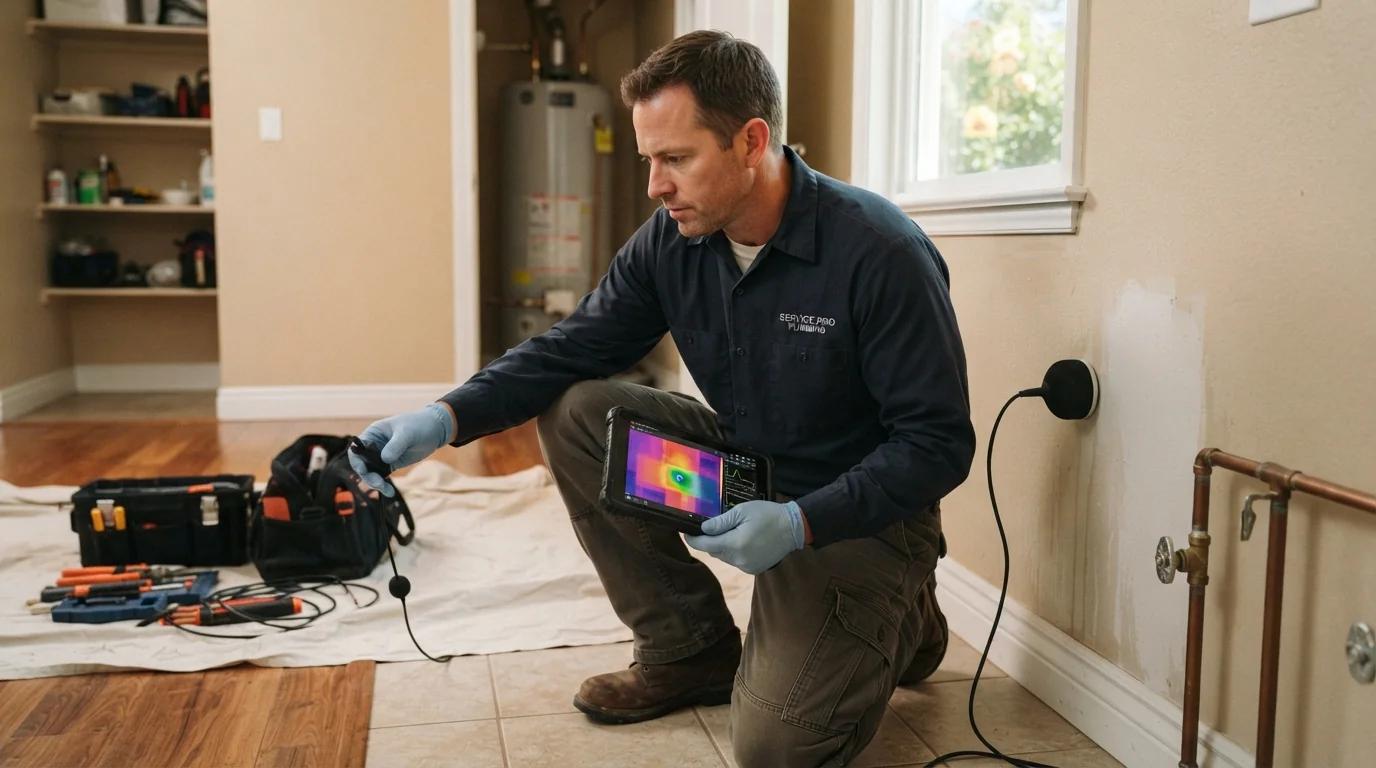
Then the tools do the fine work: acoustic equipment hears pressurized water escaping through concrete and drywall, and a thermal camera shows the cooler or warmer patch the leak leaves behind.
Warning signs
Signs of a hidden leak
- Meter moving with everything offWater is escaping somewhere.
- Unexplained high billUse up with no change in habits.
- Warm spot on the floorA hot line under the slab.
- Stains or bubbling paintWater behind a wall or ceiling.
- Sound of running waterWhen no fixture is open.
- Damp or green patch outsideA yard line leaking underground.
Acoustic and thermal locating
Water escaping under pressure makes a sound that travels through pipe, concrete and soil. Ground microphones and contact sensors pick it up, and the loudest point is usually right above the leak. A thermal camera adds a second line of evidence: a hot line leaking under a slab shows as a warm patch, and a cold leak in a wall shows as a cooler area. We use both before marking a spot, because each can mislead on its own, and a wrong mark means an extra hole in your floor.
High water bill investigation
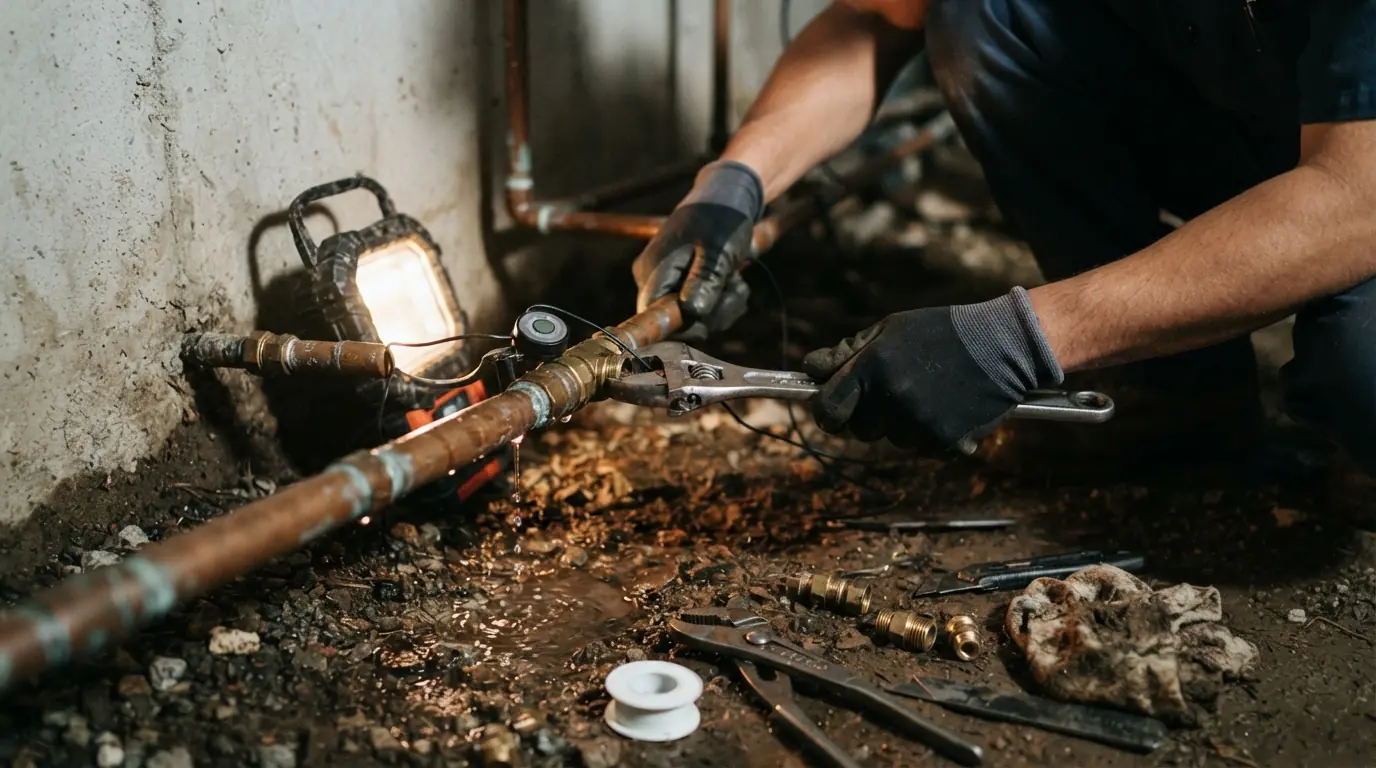
A bill that jumps with no change in use is often the first sign. We read the meter with everything off and watch the leak indicator. If it moves, we isolate the house from the irrigation and the yard line at their valves. Running toilets are a common silent cause and easy to rule out. If the leak is between the meter and the house, it shows up underground in the yard line rather than inside, and that changes the repair.
Hidden wall leaks
Leaks inside walls show as stains, bubbling paint, soft drywall or a musty smell, often some distance from the actual pipe. We check supply and drain lines serving that wall, run fixtures one at a time to separate supply leaks, which run constantly, from drain leaks, which only show with use, and confirm with moisture meters and thermal imaging. The opening is then made once, in the right place, and sized to repair the pipe properly without enlarging it later or opening a second spot nearby.
How the job runs
How a leak detection visit runs
- 1
Meter test
Confirm a leak with everything off.
- 2
Isolate
House, yard line, hot or cold.
- 3
Narrow to a branch
Close valves one by one.
- 4
Pinpoint
Acoustic and thermal locating.
- 5
Mark the spot
One opening, sized for the repair.
- 6
Repair or plan
Fix it now or schedule the repair.
Local context
Where hidden leaks tend to start in older San Jose houses
Hidden leaks are most common where supply pipe is oldest. Much of the housing in Willow Glen, Rose Garden and Naglee Park predates 1950, and a lot of it still carries the original galvanized steel supply, now more than 70 years old. In those homes a leak behind a wall is often the first failure of a line that is thinning throughout, so after we locate it we also look at the pipe we expose.
Included
What leak detection includes
- Meter and leak indicator test
- Irrigation and yard line isolation
- Hot and cold pressure tests
- Acoustic locating
- Thermal imaging
- Marked location for one opening
- Written findings with photos
Cost factors
What leak detection costs depend on
We do not publish a local leak detection price; how quickly the leak can be isolated sets most of it.
- Leak location. inside, under the slab or in the yard
- Isolation. shutoff valves that work shorten the search
- Signal strength. small leaks take longer to hear
- Surfaces. tile and concrete versus drywall
- Repair on the same visit. if the pipe is reachable
- Documentation. for insurance claims
FAQ
Leak Detection questions from San Jose homeowners
By isolating it with valves and pressure tests, then pinpointing it acoustically and thermally before opening anything.
Yes. Acoustic equipment hears pressurized water through slab, and thermal imaging helps on hot lines.
A meter test with everything off tells us whether there's a leak, then we isolate it.
Often, if the pipe is reachable once located.
Yes. Findings and photos are written up.
Same family
Related work in emergency & leaks
Main Water Line Repair
Meter-to-house line, Trenchless water line.
How we handle main water line repairPipe Leak Repair
Under-sink joints, Crawl space lines.
How we handle pipe leak repairSlab Leak Repair
Spot repair through the slab, Reroute overhead.
Read about slab leak repairEmergency Plumber
After-hours calls, Burst pipe shutoff.
Emergency PlumberCeiling and Wall Water Damage Plumbing
Upstairs bathroom leaks, Stack and vent leaks.
Ceiling and Wall Water Damage Plumbing
One number, any hour
Find the leak before it finds the floor
Call any hour and describe what you are seeing. We will locate it first.