Sump and ejector pump installation in San Jose
A pump earns its keep on the one wet night it runs, so we install it to start reliably and discharge where the water will not come back.
- 24/7 answered
- Phelan Ave San Jose office
- Tank, tankless, heat pump
Perfect Tankless Plumbing, San Jose, CA
Sump pump installation in San Jose covers crawl space pumps that remove standing groundwater, battery backup pumps for power outages, and sewage ejector pumps that lift waste from a below-grade bathroom to the sewer; each needs a proper pit, a check valve, and a legal discharge point.
Updated September 2026
Fixtures & Bath
Which pump does which job
A sump pump moves clear groundwater out of a crawl space or a low area and discharges it away from the house. A sewage ejector pump is a different machine: it grinds or lifts wastewater from fixtures below the sewer line, such as a basement bathroom or a garage conversion, up into the drain system.
Both need a sealed or covered pit sized to the inflow, a check valve so water does not run back, and a discharge line routed where it is allowed to go.
Cost factors
What sets the cost of a pump install
We do not publish a local pump price; the pit, the discharge route and the pump type set the scope.
- Pump type. sump, backup or ejector
- Pit work. digging or setting a new basin
- Discharge route. length and where it can legally go
- Electrical. a dedicated outlet near the pit
- Alarm. high-water alerts for ejectors
- Permit. required for ejector systems
DIY or call
Pump maintenance you can do
| Task | Reasonable to DIY | Call a plumber |
|---|---|---|
| Testing with a bucket of water | Yes | If it does not start |
| Clearing debris from the pit | Yes, power off | If silt keeps returning |
| Testing the backup alarm | Yes | If it does not sound |
| Replacing a float switch | Handy owners | If it keeps sticking |
| Replacing the pump | No | Always |
| Servicing an ejector basin | No | Always |
Included
What a pump install includes
- Pit or basin at the low point
- Pump sized to inflow
- Vertical or reliable float switch
- Check valve and shutoff
- Discharge routed away from the house
- Backup or alarm where specified
- Fill test before we leave
Crawl space pump
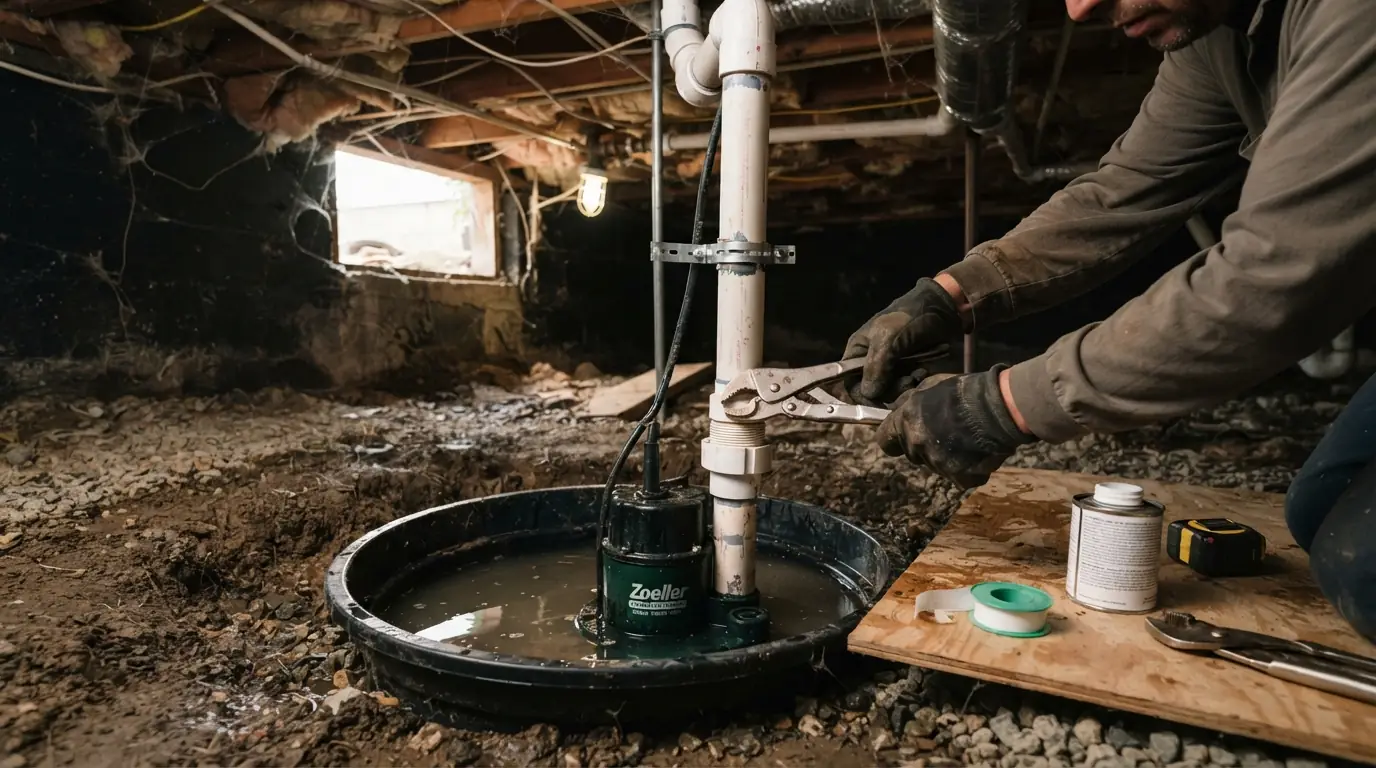
Crawl spaces that collect water after heavy rain need a low point, a pit and a pump that switches on by float. We dig or set the pit at the lowest spot, add a perforated basin so groundwater can enter while silt stays out, and run the discharge outside to a place where it drains away from the foundation. A vertical float switch is less likely to jam than a tethered one in a tight pit, and we test it by filling the basin before we leave.
Battery backup
Storms that fill a crawl space often knock the power out too. A battery backup pump sits beside the primary in the same pit, with its own float and check valve, and runs from a sealed battery when the main pump loses power or fails. We size the battery to the expected run time, set the backup float slightly higher than the primary's, and show you the alarm and how to test it. Batteries need replacing every few years, which we note on the unit.
Ejector pump for below-grade baths
Fixtures below the level of the sewer line cannot drain by gravity. An ejector pump in a sealed, vented basin collects their waste and pumps it up into the building drain. We size the pump to the fixtures, vent the basin as the code requires, install a check valve and a full-port shutoff on the discharge, and set a high-water alarm so a failure is noticed before the basin overflows. This is permitted work and inspected before the floor is closed.
Local context
Wet crawl spaces in San Jose's raised-floor houses
Most of the pump calls we take in San Jose come from raised-floor houses, where a crawl space that stays dry all summer can take on water during a wet winter week. Standing water under the floor raises humidity, wets insulation and invites mold on the framing. A small pump in a pit at the lowest point, discharging well away from the foundation, is usually the right fix, and it pairs with clearing the downspout lines that often caused the water in the first place.
How the job runs
How a pump install runs
- 1
Find the low point
Where water collects.
- 2
Set the pit
Basin sized to inflow.
- 3
Install the pump
Float, check valve and shutoff.
- 4
Run the discharge
Away from the foundation.
- 5
Add backup or alarm
Where the job calls for it.
- 6
Test
Fill the basin and watch it cycle.
FAQ
Sump Pump Installation questions from San Jose homeowners
If water stands under the house after rain, yes, alongside fixing downspouts and grading that send water there.
A sump pump moves clear groundwater. An ejector pump lifts sewage from fixtures below the sewer line.
It depends on how often it runs. Testing it before the rainy season catches a failing pump early.
If a failure would flood living space or storage, a battery backup is inexpensive protection.
Away from the foundation to a legal point. Sump water should not go into the sanitary sewer.
Same family
Related work in fixtures & bath
Kitchen Remodel Plumbing
Moving the sink or adding an island, Gas range and pot filler lines.
Moving the sink or adding an island and related workFaucet Repair and Replacement
Cartridge replacement, Kitchen faucet swap.
Cartridge replacement and related workWater-Conserving Fixture Upgrades
Toilets over 1.6 gallons per flush, Showerheads and faucet aerators.
Water-Conserving Fixture UpgradesShower Repair
Shower valve replacement, Cartridge and diverter.
Shower valve replacement and related workKitchen Sink Plumbing
P-trap and drain assembly, Sink replacement.
P-trap and drain assembly and related work
One number, any hour
Keep the water out from under the house
Call to plan a sump or ejector pump. We will find the low point and the right discharge route.