Finding and fixing radiant slab heating leaks in San Jose
Radiant loops cast in a concrete floor leak quietly for months, and the boiler's pressure gauge is usually the first thing to notice.
- 24/7 answered
- Phelan Ave San Jose office
- Tank, tankless, heat pump
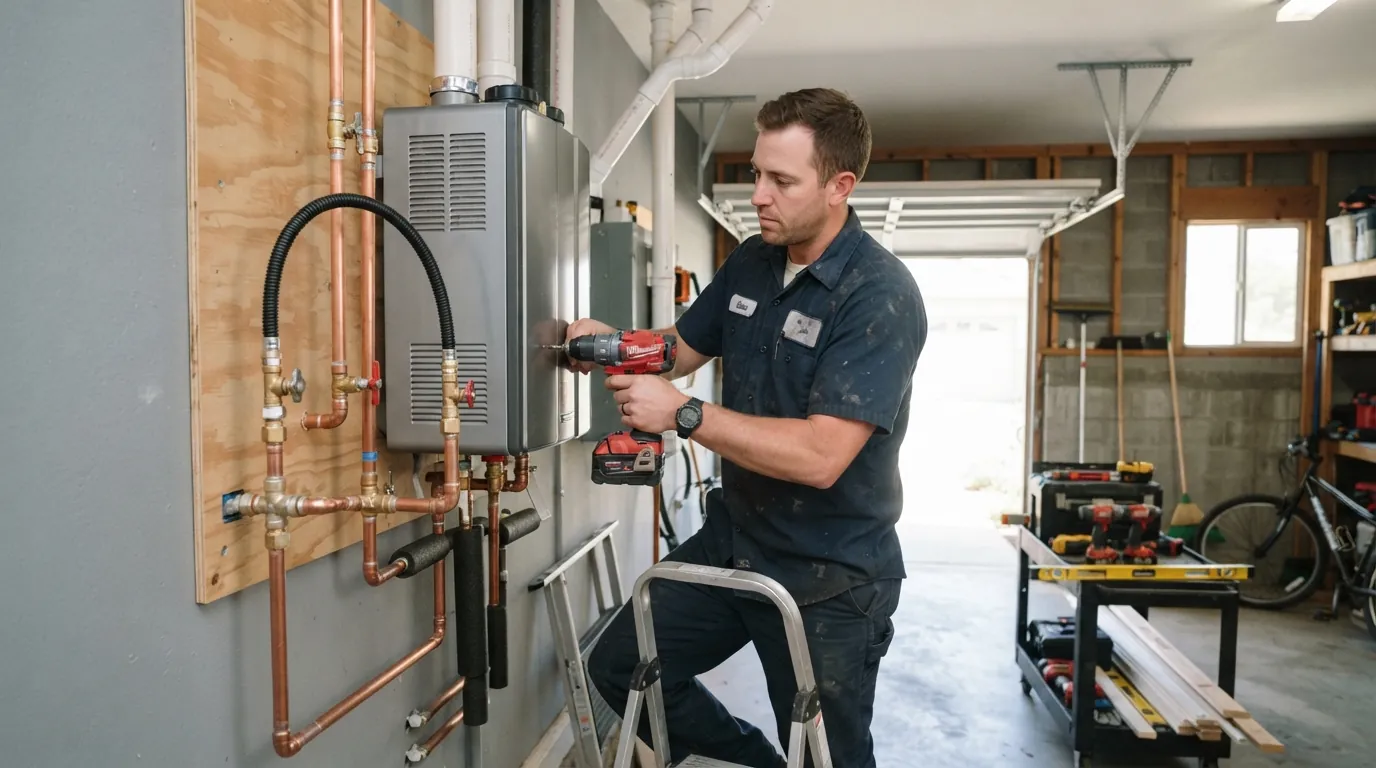
Perfect Tankless Plumbing, San Jose, CA
A radiant slab heating leak in a San Jose Eichler or slab home is a leak in the hot water loops cast into the floor; we confirm it with a pressure test on the boiler circuit, locate it with thermal imaging and acoustic tools, then repair the loop through a small opening or abandon it and reroute heat elsewhere.
Updated September 2026
Emergency & Leaks
How radiant leaks show up
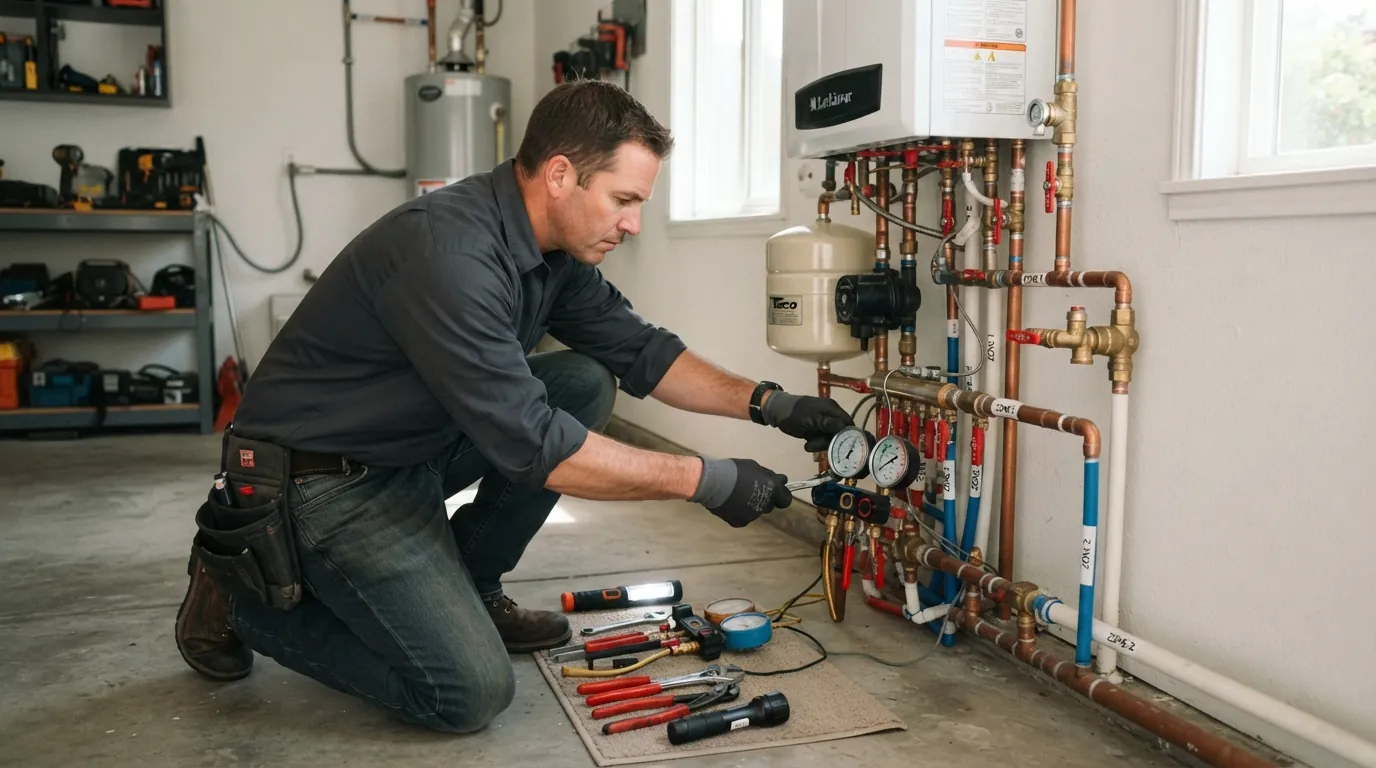
Radiant floor heating circulates hot water from a boiler through loops of pipe inside the slab. When a loop leaks, water escapes into the concrete and the soil below. The signs are indirect: a boiler that keeps losing pressure and needs topping up, a warm damp patch on the floor, a room that no longer heats, or a rising water bill if the system refills automatically.
A radiant leak is a heating problem, not a supply-line problem, so the first job is confirming which system is leaking before anything is cut.
Warning signs
Signs a radiant loop is leaking
- Boiler pressure keeps droppingThe system loses water between cycles.
- Fill valve runs oftenWater is being added automatically.
- Warm damp patchHot water escaping under the floor.
- One room stays coldA loop has lost flow.
- Rising water billAutomatic refills hide the leak.
- Relief valve drippingSometimes a boiler fault, not the slab.
Pressure loss on the boiler
A closed radiant system should hold steady pressure. If the gauge drops between heating cycles, or the automatic fill valve keeps adding water, something is leaking. We isolate the boiler from the loops, pressure test each zone separately, and watch which one falls. That narrows the leak to a zone before any locating equipment comes out, and it rules out the boiler's own relief valve, expansion tank or fittings, which can mimic a slab leak and are much cheaper to fix.
Locating the loop leak
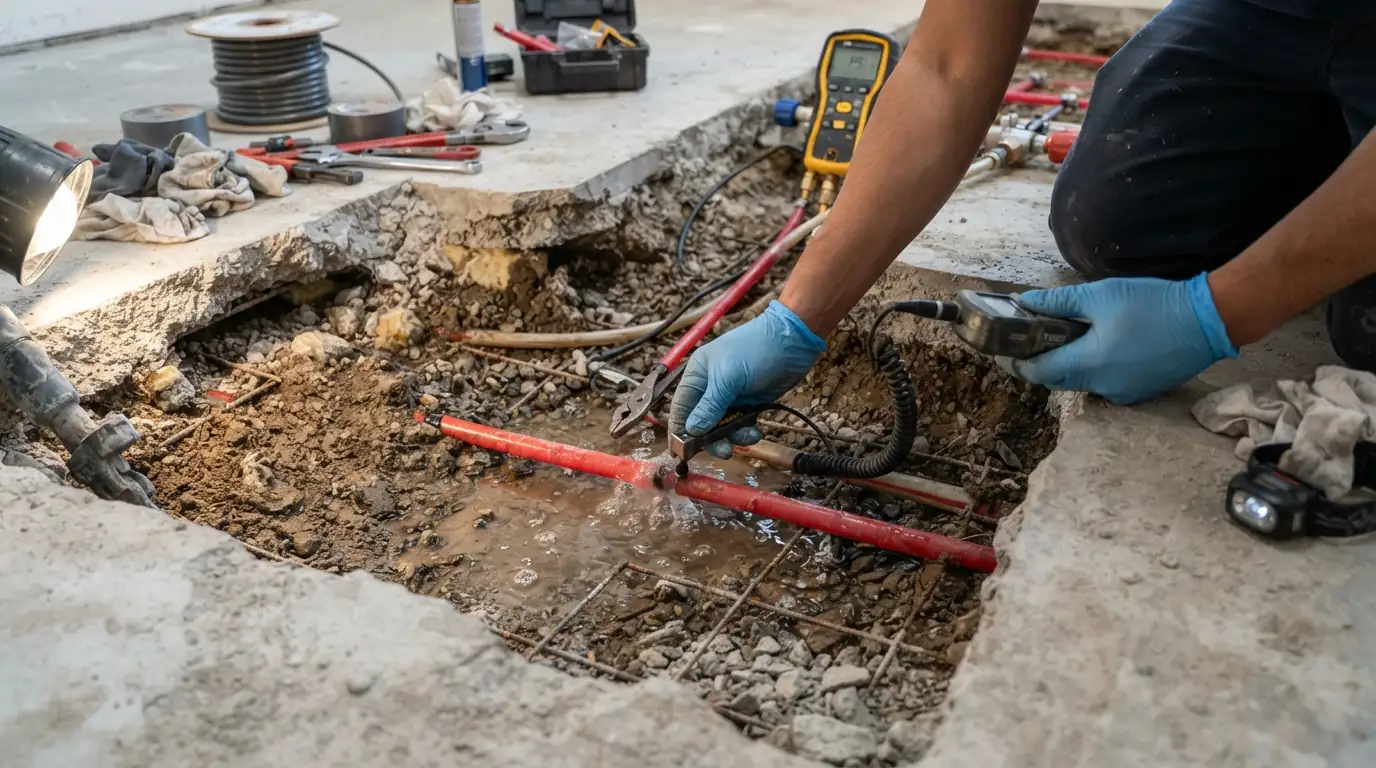
With the leaking zone identified, we run warm water through it and use a thermal camera to trace the loops through the floor surface, then look for the bloom of heat where water is escaping. Acoustic listening confirms the spot. Mapping the loop layout thermally also shows where the other loops run, so a repair opening avoids cutting a healthy loop next to the leak. The spot is marked, with its depth estimated, before any flooring comes up, so the opening is as small as the repair allows.
Abandoning or rerouting loops
Old steel or copper radiant loops that have leaked in several places may not be worth repairing again. The options are to abandon the failed zone and heat that area another way, or to run new heating loops above the slab where the floor build-up allows. We lay out the trade-offs honestly: a spot repair costs least today, while retiring a failing zone stops repeated leaks under finished floors that many Eichler owners have restored carefully, and we help you weigh both before any decision is made.
How the job runs
How a radiant leak job runs
- 1
Check the boiler
Relief valve, expansion tank and fill.
- 2
Test each zone
Isolate and watch pressure.
- 3
Map the loops
Thermal imaging of the floor.
- 4
Pinpoint the leak
Acoustic confirmation.
- 5
Repair or retire
Small opening or zone plan.
- 6
Refill and bleed
Pressure holds, heat restored.
Local context
Radiant heat in San Jose's Eichler and slab neighborhoods
Radiant slab heat is concentrated in San Jose's Eichler tracts, including the Fairglen Additions in Willow Glen, 218 Eichler houses built between 1959 and 1961 and now on the National Register of Historic Places. The slab-on-grade homes in Almaden Valley and Cambrian Park also carry their pipes under concrete. In those houses, a heating leak and a water supply leak can look alike from above, which is why we test the two systems separately before recommending a repair.
Options
Spot repair or retire the zone
| Spot repair | Retire the zone | |
|---|---|---|
| Floor opening | Small, at the leak | None |
| Cost today | Lower | Depends on the replacement heat |
| Future leaks | Possible on old loops | That zone is finished |
| Heat in that area | Restored | From another source |
| Best for | Single leak, sound loops | Repeated leaks, old pipe |
| Flooring impact | Lifted at one spot | Untouched |
Cost factors
What drives the cost of a radiant leak repair
We do not publish a local radiant repair price; the locating time and the chosen fix set it.
- Zone testing. how many zones must be isolated
- Locating. a clear thermal signature is faster
- Floor finish. concrete, tile or restored cork and wood
- Repair or retire. spot repair versus abandoning a zone
- Loop material. old steel or copper versus PEX
- Boiler checks. relief valve, expansion tank and fill valve
FAQ
Radiant Slab Heating Leak Repair questions from San Jose homeowners
Isolate the boiler loops and pressure test them. The domestic water meter and the boiler gauge tell different stories.
Thermal imaging and acoustic tools pinpoint it first, so only one small opening is needed.
For a single leak on sound pipe, yes. For repeated leaks, retiring the zone is often better.
Water escaping under the slab can wash out soil over time, so it's worth fixing.
Yes, with care for original and restored floors.
Same family
Related work in emergency & leaks
Slab Leak Repair
Spot repair through the slab, Reroute overhead.
How we handle slab leak repairBurst Pipe Repair
Pinhole copper leaks, Failed galvanized sections.
Read about burst pipe repairLeak Detection
Acoustic and thermal locating, High water bill investigation.
Leak Detection in San JoseEmergency Plumber
After-hours calls, Burst pipe shutoff.
How we handle emergency plumberPipe Leak Repair
Under-sink joints, Crawl space lines.
Read about pipe leak repair
One number, any hour
Find the leak in the radiant floor
Call and tell us what the boiler gauge is doing. We will test the zones before anything is cut.