Booster pumps for low water pressure in San Jose homes
When the pipes are sound and the regulator is working but the pressure is still weak, the supply itself is the limit, and a booster pump is the fix.
- 24/7 answered
- Phelan Ave San Jose office
- Tank, tankless, heat pump
Perfect Tankless Plumbing, San Jose, CA
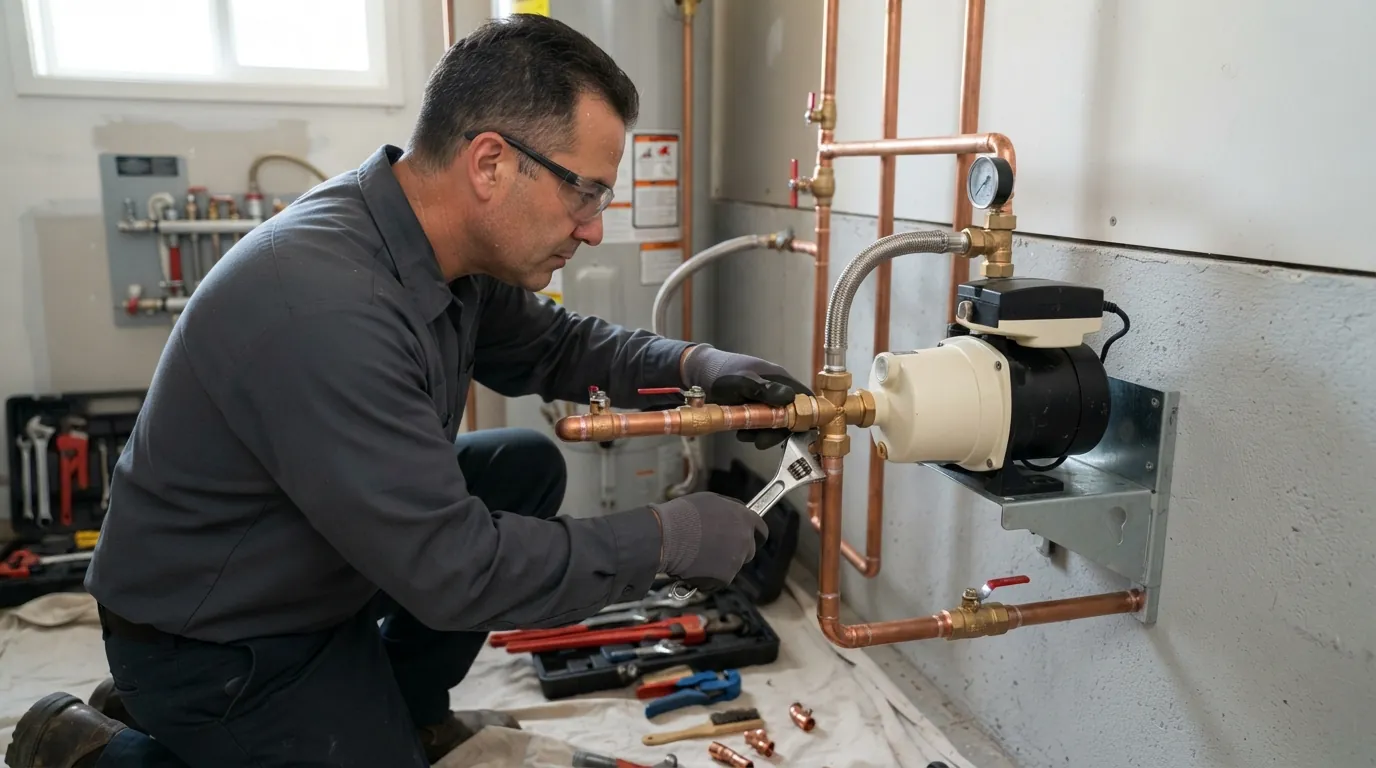
A water pressure booster pump in San Jose raises household pressure when the supply from the street is too low for upper floors, long runs or hillside lots; we confirm the pipes and regulator are not the cause first, then install a constant-pressure pump sized to your fixtures, often with a small pressure tank.
Updated September 2026
Repipe, Gas & Water Quality
When a booster pump is the right answer
Low pressure has several causes, and a pump is only the answer for one of them. Scaled aerators, narrowed galvanized pipe and a failed regulator all cause weak flow, and each has its own fix. A booster pump is for homes where the water arriving from the street simply does not carry enough pressure to reach every fixture well.
That is common on upper floors of tall homes, at the far end of long service runs, and on lots set well above the street. We test first, so a pump is never installed to hide a pipe problem.
Cost factors
What moves the cost of a booster pump
We do not publish a local booster pump price; the pressure gap and the installation location set it.
- Pressure gap. how much the pump must add
- Peak demand. fixtures running at once
- Pressure tank. added to reduce cycling
- Location. garage, exterior enclosure or crawl space
- Electrical. a dedicated circuit near the pump
- Regulator and expansion tank. adjusted to work with the pump
Options
Booster pump or another fix
| Cause | Sign | Right fix |
|---|---|---|
| Low supply pressure | Low at the meter side | Booster pump |
| Failed regulator | Pressure drifts or drops | Regulator repair |
| Narrowed galvanized pipe | Worse at far fixtures, rusty water | Pipe replacement |
| Scaled aerators | One fixture weak | Clean or replace |
| Partly closed valve | Everything weak suddenly | Open or replace the valve |
| Undersized service line | Weak with several fixtures | Upsize the line |
Upstairs and hillside pressure
Water loses pressure as it climbs, roughly half a psi for every foot of height, so a third-floor shower or a house perched above the street can get noticeably less than the ground floor. We read static pressure at the lowest hose bib and at the highest fixture, and measure flow with two fixtures running. If the numbers are low at the meter itself, not just upstairs, a booster pump is a real solution rather than a patch, and we show you the readings that justify it.
Constant-pressure pump sizing
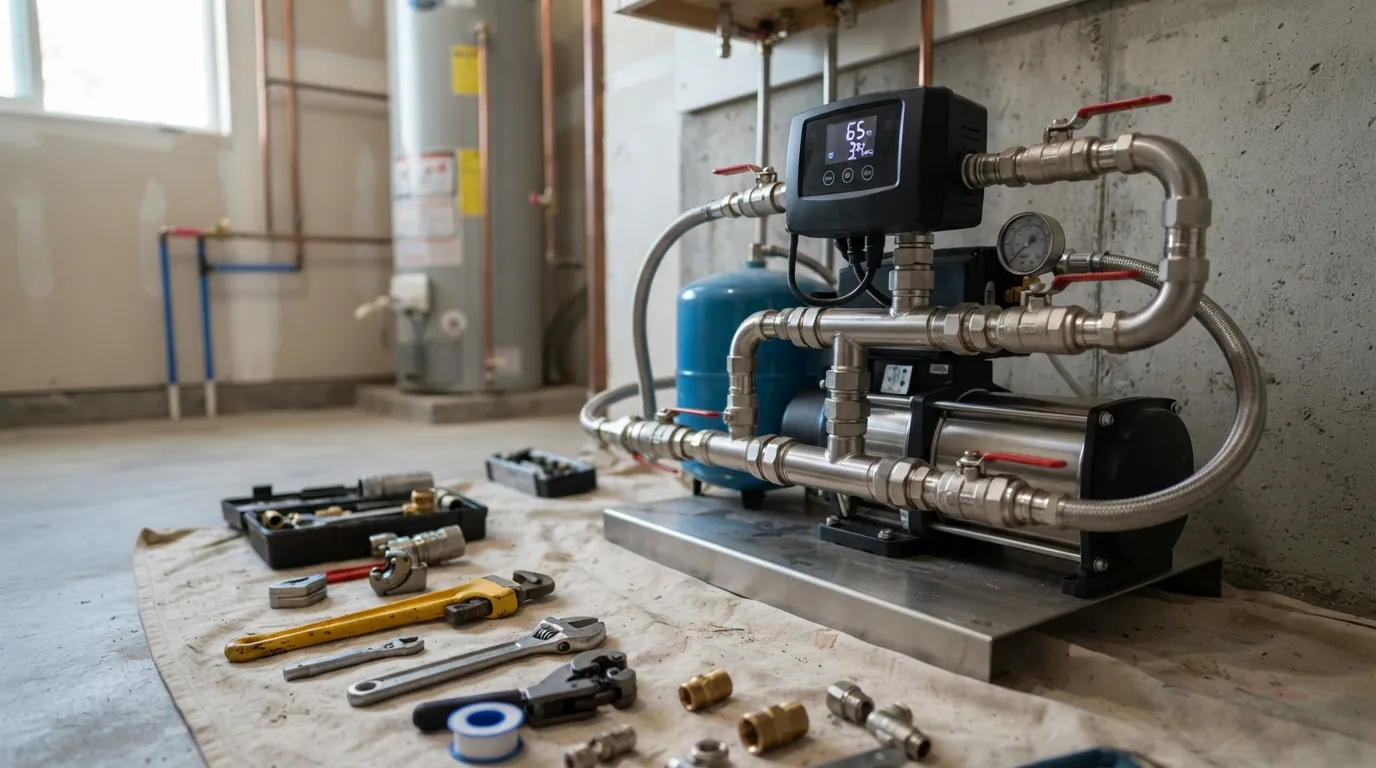
Modern constant-pressure pumps use a variable-speed motor that holds a set pressure whether one tap or four are open, instead of switching on and off. We size the pump from the house's peak fixture demand and the pressure gap to close, install it with isolation valves and a bypass so water still flows if the pump is serviced, and set the target pressure within a sensible household range so fixtures, supply hoses and the water heater are not overstressed by pressure higher than they were designed for.
Pairing with a pressure tank
A small pressure tank beside the pump covers brief draws like a toilet refill without starting the motor, which reduces cycling and extends the pump's life. We size the tank to the pump and precharge it correctly for the pressure the pump holds. Where the house has a pressure regulator, we set it to work with the pump rather than against it, and check the water heater's expansion tank, since higher steady pressure changes what that tank needs to absorb each time the heater fires.
Local context
Testing before pumping
Most weak-pressure calls we take in San Jose turn out to be scaled fixtures, narrowed old pipe or a regulator that has failed, and none of those is fixed by a pump. So every booster pump job starts with pressure readings at the meter side and at the farthest fixture. Only when the supply itself is short, as it can be on upper floors and lots well above the street, does a pump go on the quote.
How the job runs
How a booster pump install runs
- 1
Test pressure
At the meter side and highest fixture.
- 2
Rule out other causes
Pipes, regulator, fixtures.
- 3
Size the pump
Demand and pressure gap.
- 4
Install
Pump, tank, valves and bypass.
- 5
Set the pressure
Within a sensible household range.
- 6
Retest
Flow at the farthest fixture.
Warning signs
Signs a booster pump may help
- Weak upstairs showersPressure lost to height.
- Low reading at the hose bibThe supply itself is low.
- Hillside lotHouse set well above the street.
- Long service runPressure lost over distance.
- Pressure drops with two fixturesSupply cannot keep up.
- Good pipes, still weakOther causes ruled out.
FAQ
Water Pressure Booster Pump Installation questions from San Jose homeowners
Only if the supply is low. We test first to rule out pipes, regulators and fixtures.
Modern constant-pressure pumps are quiet and run only when water is being used.
A small tank reduces pump cycling and extends its life, so we usually recommend one.
Yes, which is why the target pressure is set within a sensible household range.
Yes, a dedicated circuit near the pump.
Same family
Related work in repipe, gas & water quality
Water Softener Installation
Salt-based softener, Salt-free conditioner.
Water Softener InstallationLow Water Pressure Repair
Galvanized restriction, PRV failure.
Low Water Pressure RepairMain Shutoff Valve Replacement
Seized gate valves, Quarter-turn ball valve upgrade.
Main Shutoff Valve Replacement in San JoseBackflow Testing and Repair
Annual test, Device repair.
Backflow Testing and Repair in San JoseSeismic Gas Shutoff Valve Installation
Earthquake valve at the meter, Excess flow valves.
Read about seismic gas shutoff valve installation
One number, any hour
Find out if a pump will help
Call to book a pressure test. We will tell you whether a pump is the right fix.