Whole-house repiping for older San Jose homes
Repiping replaces every supply line in the house at once, so the leak-after-leak cycle ends instead of moving to the next joint.
- 24/7 answered
- Phelan Ave San Jose office
- Tank, tankless, heat pump
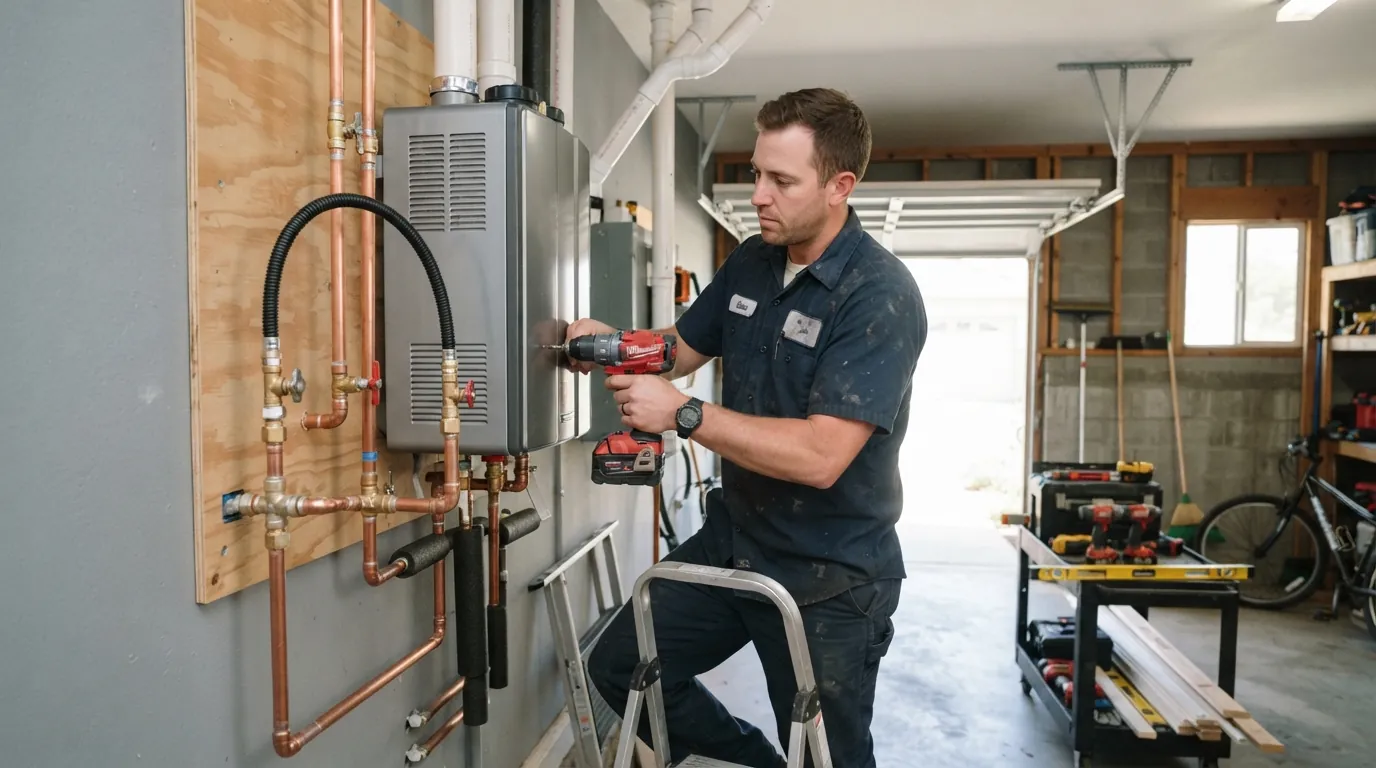
Perfect Tankless Plumbing, San Jose, CA
A whole-house repipe in San Jose replaces aging galvanized or thinning copper supply lines with PEX or copper, usually in two to four days; published 2026 figures put a PEX-A repipe on a 2,000 square foot San Jose home at roughly $7,500 to $14,000, with slab foundations adding cost.
Updated September 2026
Repipe, Gas & Water Quality
When a repipe is the right call
One leak is a repair. Rusty water, low pressure at several fixtures and leaks in different places over a year or two are signs the whole supply system has reached its end. Patching then costs more over time than replacing it once.
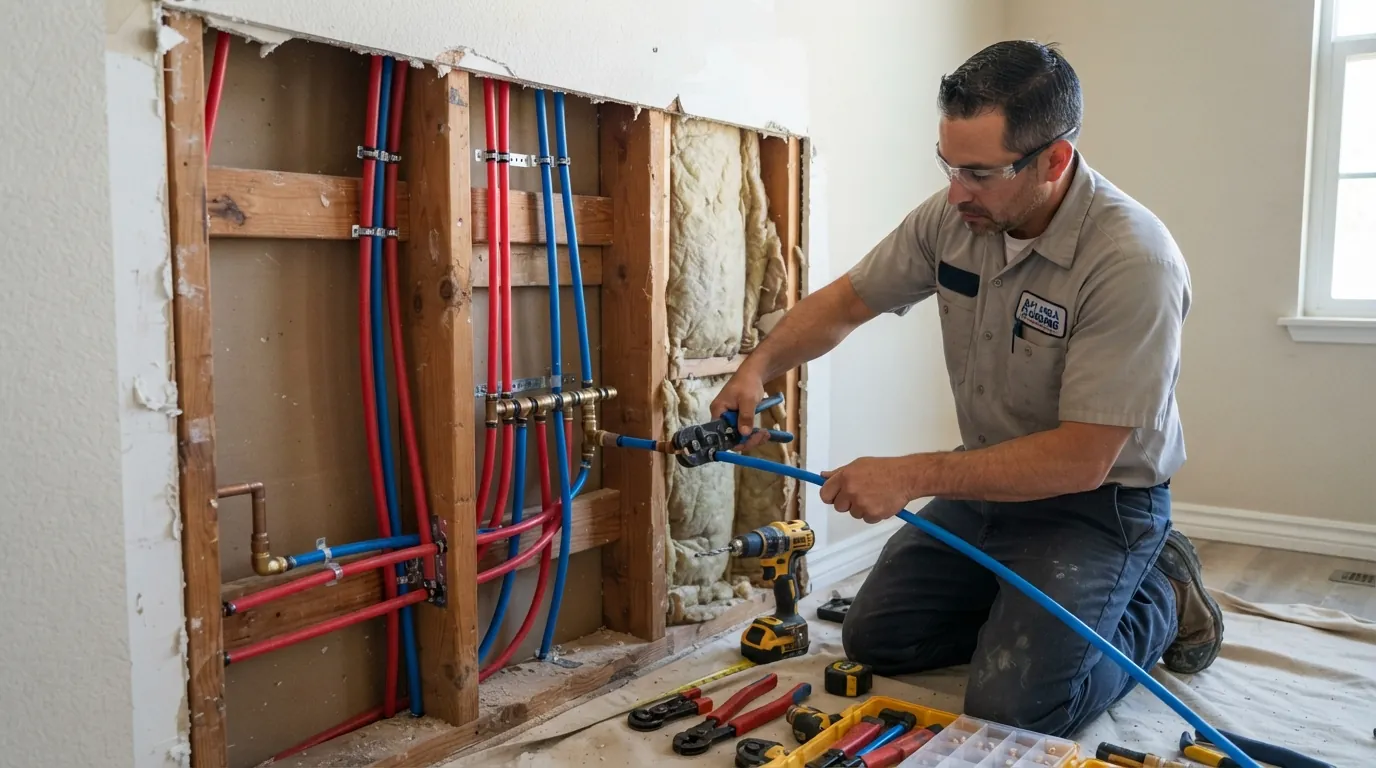
A repipe runs new supply lines from the main to every fixture through the crawl space, attic or walls, with small openings that are patched afterwards. Drains are separate and usually stay unless they are also failing.
Cost factors
What a repipe costs in San Jose
Two published ranges are below; material, size and foundation type decide where a house falls.
- Whole-house PEX repipe (San Jose, 2,000 sq ft)$7,500 to $14,000. Planning range from plumbingpriceguide.com, not our quote.
- Whole-house repipe (Santa Clara County)$4,200 to $16,100 PEX-A; $5,500 to $21,000 copper; slab foundations add 30-38%. Planning range from repipechampions.com, not our quote.
- Material. PEX-A or copper
- Number of bathrooms. more fixtures, more runs
- Foundation. slab houses cost more to route
- Wall openings. and the patching after
- Main shutoff and stops. replaced as part of the job
- Permit and inspection. required on repipes
Options
PEX or copper for your repipe
| PEX-A | Copper | |
|---|---|---|
| Published San Jose or county range | About $4,200 to $16,100 (county, PEX-A) | About $5,500 to $21,000 (county) |
| Fittings | Fewer, flexible runs | More, soldered joints |
| Wall openings | Fewer | More |
| Scale and corrosion | Resists both | Can pinhole over decades |
| Install time | Faster | Slower |
| Sunlight and heat | Must be protected | Not an issue |
Included
What a repipe includes
- Route plan and permit
- New supply lines to every fixture
- New stop valves
- New main shutoff where needed
- Pressure test before switchover
- City inspection
- Openings patched
PEX repipe
PEX is flexible, resists scale and corrosion, and needs fewer fittings because it bends around corners. That means fewer wall openings and a faster job. We use PEX-A with expansion fittings, run home runs or branch layouts to suit the house, and protect it where it passes through framing. It is the most common repipe material in San Jose for good reason, though it must be kept out of direct sunlight and away from heat sources near the water heater.
Copper repipe
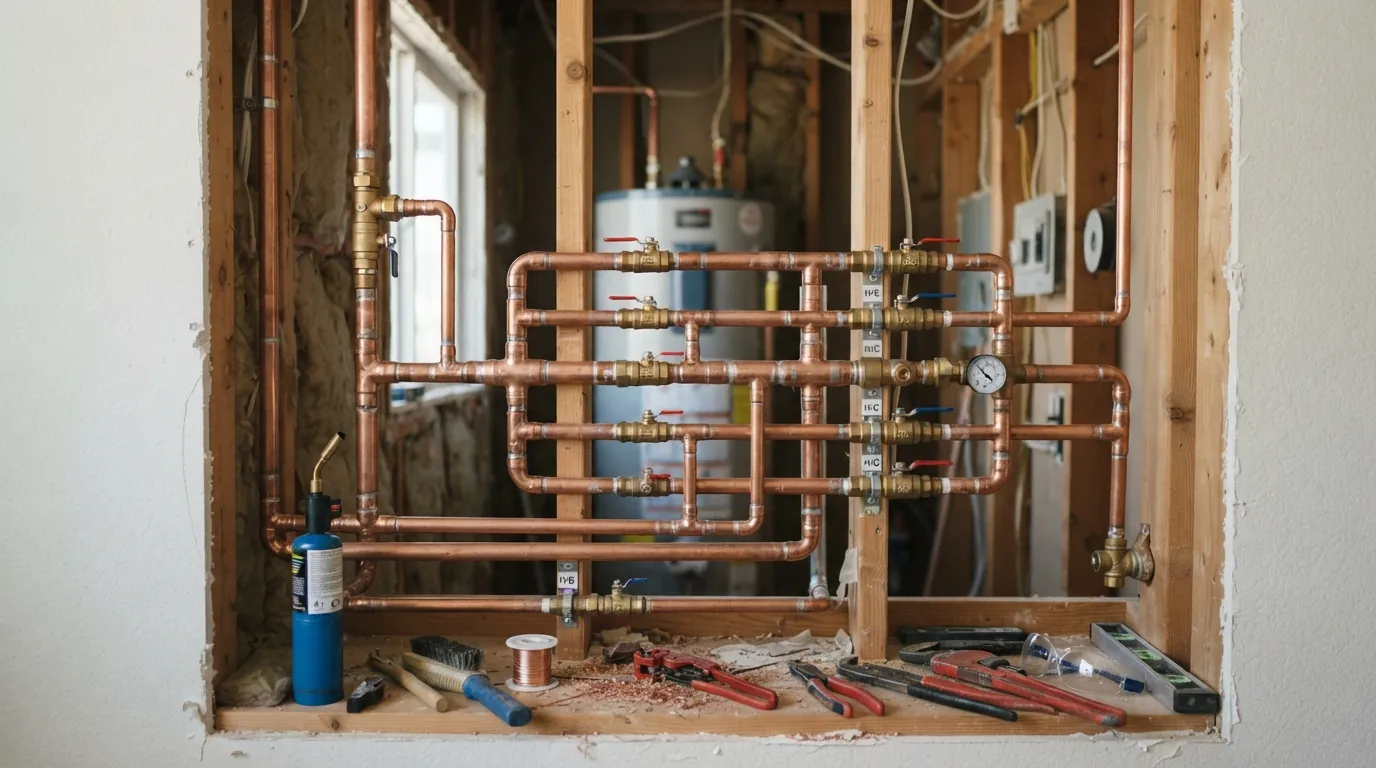
Copper is durable, familiar and preferred by some owners and buyers. It costs more in material and labor, needs soldered joints, and is more sensitive to aggressive water over decades. We use Type L copper where owners want it, support and insulate it correctly, and bond it as required. The price difference between copper and PEX is significant, and we show both before you decide. Some owners choose copper for resale reasons or personal preference, and it remains a sound, long-lived choice when installed correctly.
Galvanized removal
Galvanized supply lines are usually abandoned in place where they are inaccessible and removed where they are reachable, so they no longer carry water. We disconnect them at the main and at each fixture, replace the stop valves as the new lines reach each fixture, and install a new main shutoff if the old one no longer closes. The water quality improves the day the new system goes live, and the rusty first draw in the morning that many owners have lived with for years disappears.
Slab vs crawl space routing
In crawl space houses, new lines run under the floor and rise through small openings at each fixture wall. In slab houses, where the original pipes are under concrete, we reroute through the attic and down inside walls, which needs more wall openings but avoids the slab entirely. Both approaches are patched afterwards. Slab houses cost more to repipe for this reason, and we explain the route, the number of openings and where each one will be before the job starts, so there are no surprises when the drywall comes out.
Local context
Repiping slab-built Eichlers in Willow Glen
San Jose has about 500 Eichler homes, most in Willow Glen tracts such as Fairglen, and every one sits on a slab with radiant heating cast into it. Repiping those houses means routing the new supply overhead through the roof structure and down the walls, often with limited attic space because of their low, flat rooflines. We plan that route before any opening is made, so the radiant slab is left alone and the finish work stays small.
How the job runs
How a repipe runs
- 1
Plan the route
Crawl space, attic and walls.
- 2
Permit
Filed with the City of San Jose.
- 3
Protect the house
Floors and furniture covered.
- 4
Run the new lines
Main to every fixture.
- 5
Switch over
New stops, pressure test, water on.
- 6
Inspect and patch
Inspection, then openings patched.
Timing
How long you will be without water
Most homes are repiped in two to four days, and in most cases the water is back on each evening while work continues.
The final switchover is usually a single day, followed by the inspection and patching.
FAQ
Whole-House Repiping questions from San Jose homeowners
Rusty water, low pressure at several fixtures and repeated leaks point to a system at the end of its life.
Both work. PEX is faster and less expensive; copper costs more. We show both.
Small openings at fixtures and along routes, patched afterwards.
Yes. Repipes are permitted and inspected.
Usually, yes. Water is typically restored each evening.
Same family
Related work in repipe, gas & water quality
Water Softener Installation
Salt-based softener, Salt-free conditioner.
Water Softener Installation in San JoseSeismic Gas Shutoff Valve Installation
Earthquake valve at the meter, Excess flow valves.
Seismic Gas Shutoff Valve InstallationLow Water Pressure Repair
Galvanized restriction, PRV failure.
Low Water Pressure Repair in San JosePlumbing Inspection
Pre-purchase inspection, Annual whole-home check.
Pre-purchase inspection and related workBackflow Testing and Repair
Annual test, Device repair.
How we handle backflow testing and repair
From our guides: Our failing galvanized pipes guide.
One number, any hour
Plan the repipe once
Call to book an inspection of your supply lines. We will tell you whether a repipe is due.