Replacing a worn-out tankless water heater in San Jose
When a tankless unit has done its years, the replacement is usually simpler than the original conversion, because the gas line and venting are already there.
- 24/7 answered
- Phelan Ave San Jose office
- Tank, tankless, heat pump
Perfect Tankless Plumbing, San Jose, CA
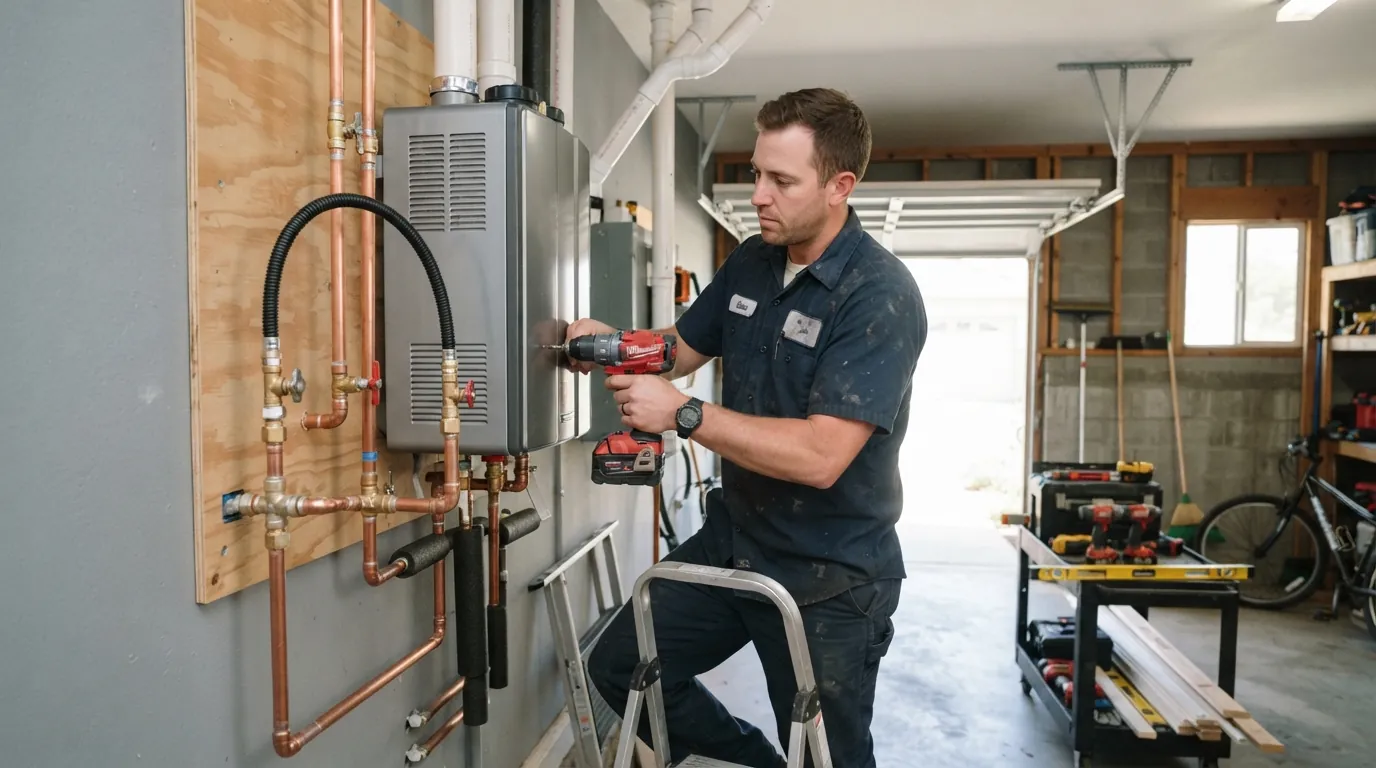
Replacing a tankless water heater in San Jose usually means swapping the unit on the existing wall mount, gas supply and vent route after checking each still meets the new model's requirements; it is often a shorter job than the original tank-to-tankless conversion, and it is still permitted and inspected.
Updated September 2026
Water Heaters
When a tankless unit is worth replacing
Most tankless repairs are a sensor, an igniter or a descaling flush. Replacement makes sense when the heat exchanger itself has failed, when it is leaking, when parts are no longer made for the model, or when the unit is simply too small for the household it now serves.
The good news is that the expensive part of going tankless, the larger gas line and the new vent run, was paid for the first time. We check whether that infrastructure suits the replacement before quoting, so you are not paying for it twice.
Cost factors
What moves the cost of a tankless replacement
We have no published San Jose figure for replacing an existing tankless unit, so the scope is set by these factors.
- Unit size. same capacity or larger
- Condensing or not. decides the vent material
- Venting. reused if approved, replaced if not
- Gas line. adequate now or needs a short upsize
- Valves and condensate. isolation valves and a neutralizer
- Permit and inspection. required on every replacement
Options
Replace with tankless or go back to a tank
| New tankless unit | New tank heater | |
|---|---|---|
| Hot water supply | Continuous | Limited to the tank |
| Existing gas and venting | Often reused | Usually re-plumbed |
| Space | Stays on the wall | Needs floor space |
| Upkeep | Annual descaling | Flushing and anode checks |
| Install time | Often under a day | About a day to convert back |
| Best for | Homes already set up for tankless | Low-demand households |
Like-for-like swap
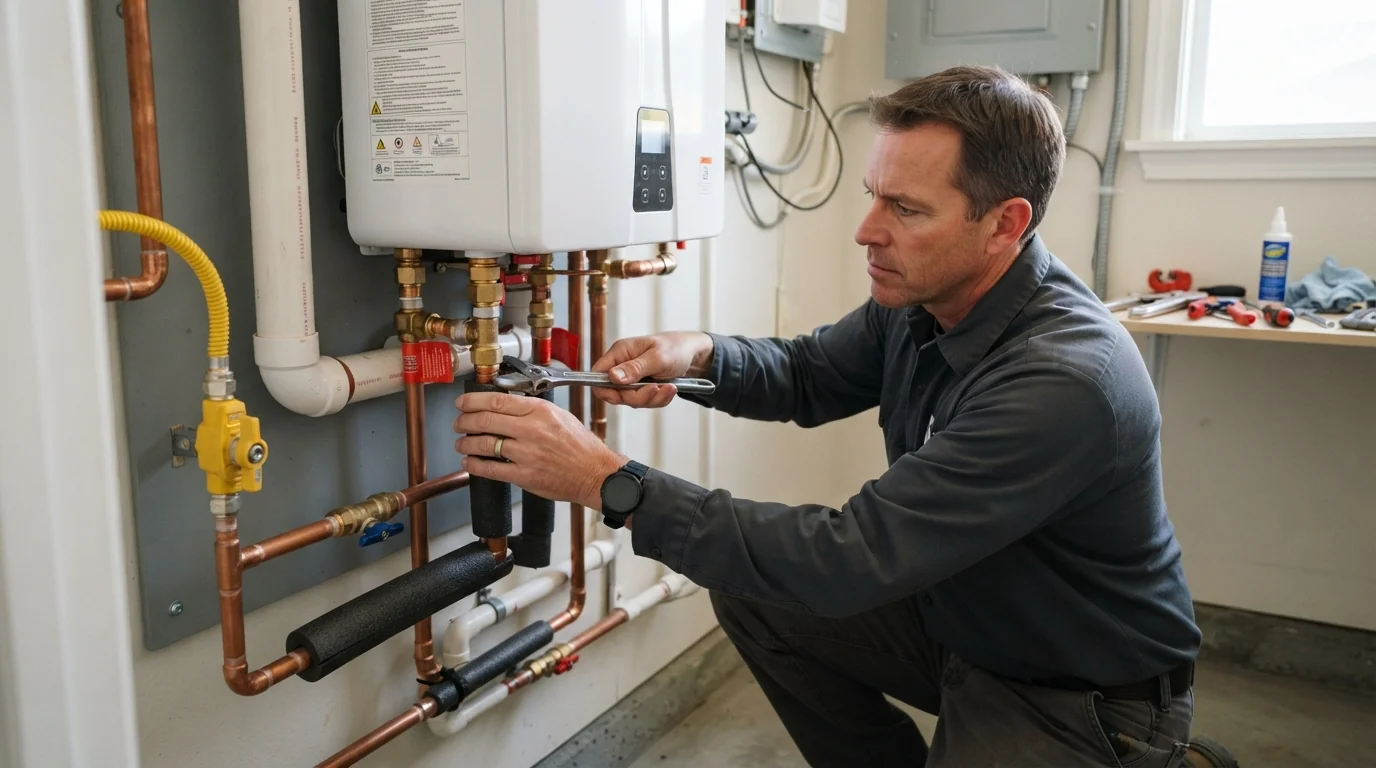
When the existing unit is the right size and the gas line, venting and condensate drain all meet the new model's specifications, the swap is straightforward. We isolate and remove the old unit, mount the new one, reconnect gas, water, venting and condensate, then fit new isolation valves if the old ones are worn. We purge air from the lines, check gas pressure at full fire and confirm the outlet temperature at a tap before the permit inspection is booked, so the house has hot water again the same day in most cases.
Upsizing a tired unit
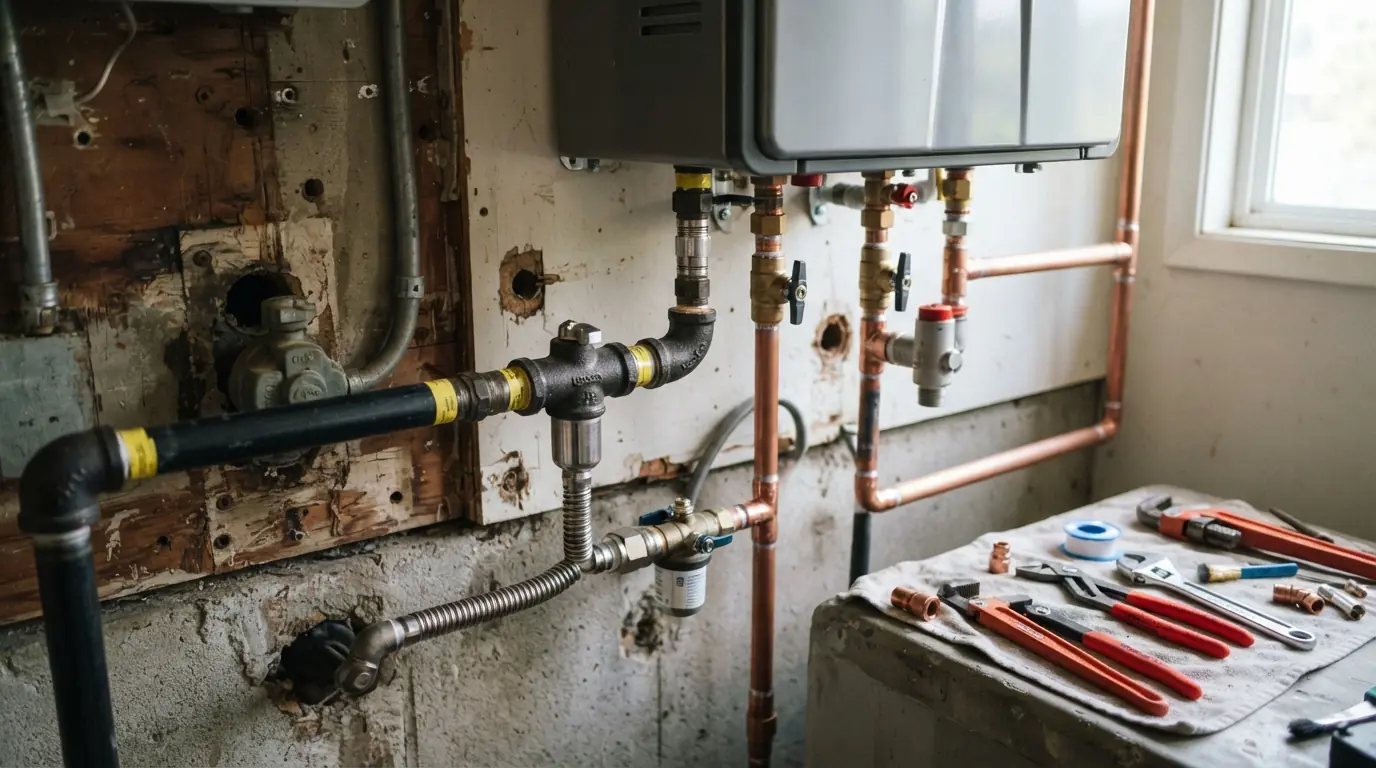
Families grow and bathrooms get added, and a unit that suited two people can struggle with four. If showers go lukewarm when two run together, a larger unit is the fix, but it may need more gas than the existing line can carry. We calculate the combined load with your other gas appliances, check the meter, and tell you whether the current line can support the bigger unit or needs a short upsize. That keeps the new unit from underperforming in its first winter.
Reusing venting and gas
Reusing existing venting is only safe when the new unit is approved for that vent material, diameter and length. Condensing units normally vent through PVC or polypropylene and non-condensing units need stainless steel, so switching between the two types usually means new venting. We check the manufacturer's installation manual against what is on the wall, replace any vent section that does not match, and pressure test the gas connection so nothing on the wall is reused on assumption alone, and the inspector sees a documented, approved vent system.
Local context
Hard water and the life of a tankless unit here
San Jose Water Company explains the white film on showerheads and glass as the residue of hardness left when water heats or evaporates, and inside a tankless unit that residue settles on the heat exchanger. A unit that was never descaled is the one most likely to need replacing early here. When we fit the replacement, we add isolation valves and set out a flushing schedule, so the new heat exchanger does not go the same way as the old one.
How the job runs
How a tankless replacement runs
- 1
Check the old install
Gas, venting, condensate and valves.
- 2
Size the new unit
Against the household's peak demand.
- 3
Permit
Filed with the City of San Jose.
- 4
Swap the unit
Old unit out, new unit mounted.
- 5
Commission
Gas pressure, temperature and flow.
- 6
Set the flush schedule
Valves fitted and dates written down.
FAQ
Tankless Water Heater Replacement questions from San Jose homeowners
Only if the manufacturer approves that vent material, size and length. Condensing and non-condensing units often need different venting.
Usually, because the larger gas line and vent route are already in place.
If showers go lukewarm when two run at once and the gas supply checks out, yes.
Yes. Every water heater replacement in California is permitted and inspected.
Isolation valves, an annual descaling flush and, ideally, a softener upstream.
Same family
Related work in water heaters
Water Heater Replacement
40 and 50 gallon gas, Electric tank units.
How we handle water heater replacementRecirculation Pump Installation
Dedicated return line, Under-sink crossover.
How we handle recirculation pump installationNavien Tankless Water Heater Repair
Ignition and flame loss, Overheating and scale.
How we handle navien tankless water heater repairNoritz Tankless Water Heater Repair
No ignition and flame failure, Scale and flow problems.
Noritz Tankless Water Heater Repair in San JoseTankless Water Heater Repair
Error code diagnosis, Ignition failure.
Read about tankless water heater repair
One number, any hour
Replace the tankless unit the right way
Call and tell us the model on the old unit. We will check what can be reused before quoting.