Anode rod and expansion tank service for San Jose water heaters
Hard water and a closed plumbing system wear out a tank water heater from the inside.
- 24/7 answered
- Phelan Ave San Jose office
- Tank, tankless, heat pump
Perfect Tankless Plumbing, San Jose, CA
An anode rod and expansion tank service on a San Jose tank water heater replaces the corroded magnesium or aluminum rod, checks the expansion tank's air charge against house pressure, and tests the pressure regulator; local plumbers recommend checking the anode every two to three years because of the hard water.
Updated September 2026
Water Heaters
The two parts that decide how long a tank lasts
A steel water heater tank survives because a sacrificial anode rod corrodes in its place. Once the rod is eaten down to its core wire, the tank itself starts to rust, and the leak that follows means a replacement. In San Jose's hard water that happens sooner than the label on the heater suggests.
The expansion tank handles a different problem. When water heats it expands, and in a house with a check valve or pressure regulator at the main that expansion has nowhere to go. The pressure spikes every heating cycle, the relief valve drips, and fittings are stressed. A correctly charged expansion tank absorbs that.
Included
What the service includes
- Heater age and condition check
- Static pressure and creep test
- Anode rod inspection and replacement
- Tank flush for sediment
- Expansion tank charge check
- Expansion tank replacement if the bladder has failed
- Relief valve test after refill
Anode rod replacement
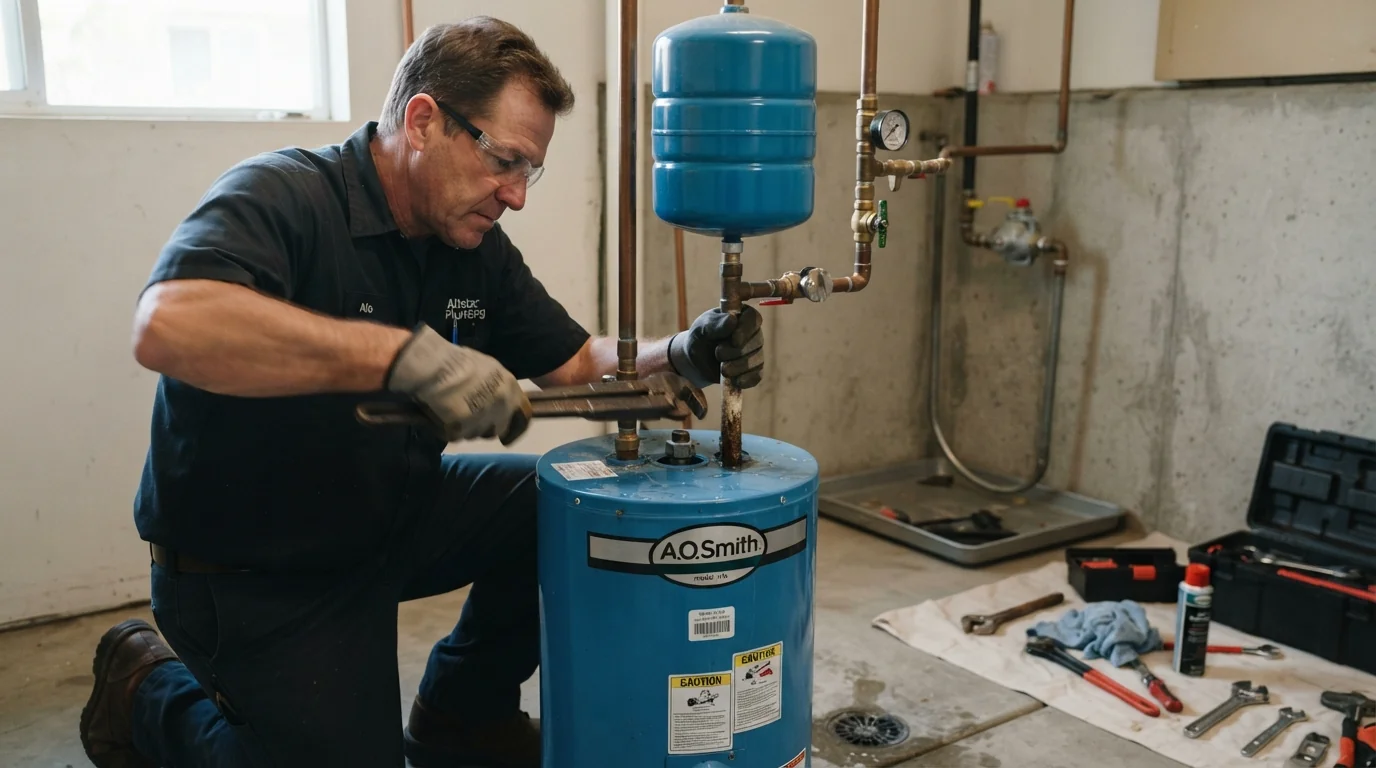
We remove the old rod, which usually takes a breaker bar and sometimes a flexible segmented rod where ceiling height is tight in a garage or closet. If it is down to bare wire, the tank has been unprotected for a while and we tell you honestly whether a new rod is still worth it. Magnesium protects best; aluminum-zinc rods help when the water smells of sulfur or rotten eggs, which comes from a reaction between the rod and bacteria in the tank.
Expansion tank install
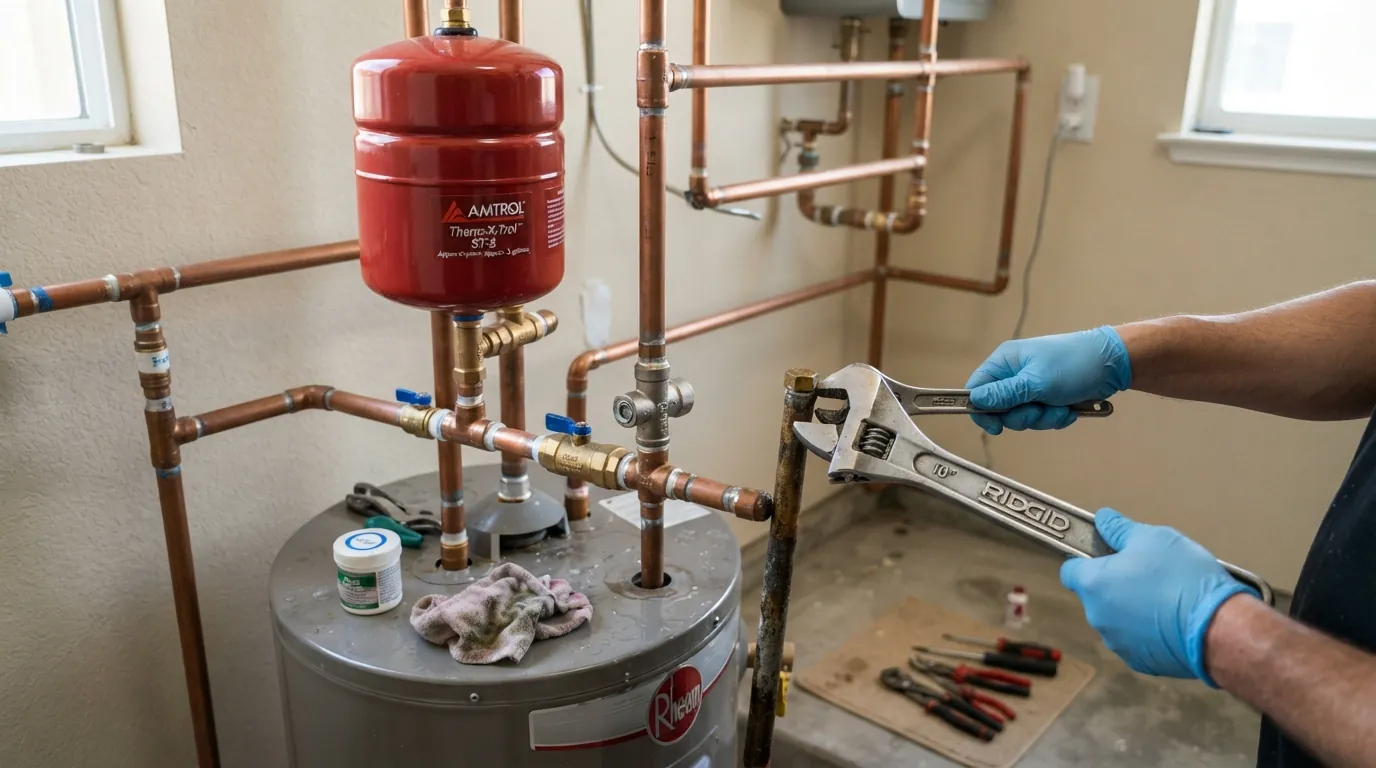
An expansion tank is sized to the water heater volume and the incoming pressure, then pre-charged with air to match that pressure before it is installed on the cold supply. A tank that was never charged, or has lost its charge, does nothing. We tap the tank and check the air valve: if water comes out, the bladder has failed and the tank is replaced. New tanks are supported properly rather than hung from the pipe, because a full tank is heavy enough to stress the fitting over time.
Pressure regulator check
Most San Jose homes have a pressure regulator where the water enters the house, and when it fails, pressure creeps up to whatever the street delivers. That shows up as banging pipes, running toilets and a relief valve that weeps. We put a gauge on a hose bib, read static pressure and watch for creep over several minutes, then adjust or replace the regulator. Keeping house pressure in a normal range protects the heater, the expansion tank and every fixture downstream.
Local context
Why San Jose tanks need this sooner than the label says
San Jose Water Company treats anything above 7 grains per gallon as hard water, and most of the city sits well above that. Minerals settle as sediment and speed up the rod's corrosion, which is why plumbers working across Santa Clara County suggest checking the anode every two to three years here instead of waiting for the tank to rumble. High PG&E rates add a second reason: a sediment-heavy tank burns more energy to deliver the same hot water.
Warning signs
Signs your heater needs this service
- Popping or rumblingSediment on the tank bottom boiling as the burner fires.
- Relief valve drippingOften thermal expansion with no working expansion tank.
- Rotten egg smell from hot waterA reaction between the anode and bacteria in the tank.
- Banging pipesPressure spikes or high house pressure.
- Rusty hot waterThe anode may be spent and the tank starting to corrode.
- Toilets refilling on their ownPressure pushing past the fill valve.
How the job runs
How the service visit runs
- 1
Check the heater
Age, model, relief valve and signs of leaks.
- 2
Read the pressure
Gauge on a hose bib for static pressure and creep.
- 3
Pull the anode
Inspect and replace if it is worn down.
- 4
Flush sediment
Drain the tank until the water runs clear.
- 5
Check or fit the expansion tank
Charge matched to house pressure.
- 6
Refill and test
Heater back on, relief valve checked, no drips.
DIY or call
What owners can do and what to leave to us
| Task | Reasonable to DIY | Call a plumber |
|---|---|---|
| Draining a few gallons from the tank | Yes, with care, the water is hot | If the drain valve leaks or will not close |
| Testing the relief valve | Yes, briefly, with a bucket ready | If it keeps dripping afterwards |
| Replacing the anode rod | Only with the right tools and clearance | Seized rods or low ceilings |
| Checking the expansion tank | Tapping it is easy | Recharging or replacing it |
| Adjusting the pressure regulator | Not recommended | Always |
| Lighting the pilot | Yes, following the label | If it will not stay lit |
Cost factors
What changes the cost of this service
The scope varies from house to house, so we do not publish a local price for this service.
- Rod type. segmented rods for low ceilings and aluminum-zinc rods for odor cost more
- Seized rod. a rod that will not break loose takes longer and sometimes cannot be removed safely
- Expansion tank size. sized to the heater volume and house pressure
- Regulator replacement. adds a valve and some piping if the old one has failed
- Heater age. on an old tank we may recommend replacement rather than service
- Sediment. a heavily sedimented tank takes longer to flush
FAQ
Expansion Tank and Anode Rod Service questions from San Jose homeowners
Every two to three years here, because of the hard water, and sooner if the tank rumbles.
Usually the anode reacting with bacteria in the tank; an aluminum-zinc rod and a flush fix it.
If your house has a pressure regulator or check valve at the main, water has nowhere to go when it heats.
On a rusting tank, replacement is the better money. On a younger tank, this is inexpensive protection.
No. Tankless units have no anode or tank; they need descaling instead.
Same family
Related work in water heaters
Water Heater Replacement
40 and 50 gallon gas, Electric tank units.
40 and 50 gallon gas and related workTankless Water Heater Replacement
Like-for-like swap, Upsizing a tired unit.
Read about tankless water heater replacementHeat Pump Water Heater Installation
Hybrid 240V units, Condensate and clearance planning.
Heat Pump Water Heater Installation in San JoseNoritz Tankless Water Heater Repair
No ignition and flame failure, Scale and flow problems.
How we handle noritz tankless water heater repairNavien Tankless Water Heater Repair
Ignition and flame loss, Overheating and scale.
Ignition and flame loss and related work
From our guides: Hard water and heaters.
One number, any hour
Book an anode and expansion tank service
Call and we will check your heater, your pressure and the parts that keep the tank alive.