Water pressure regulator replacement in San Jose
A failed pressure regulator lets full street pressure into the house, and every fixture and the water heater pay for it.
- 24/7 answered
- Phelan Ave San Jose office
- Tank, tankless, heat pump
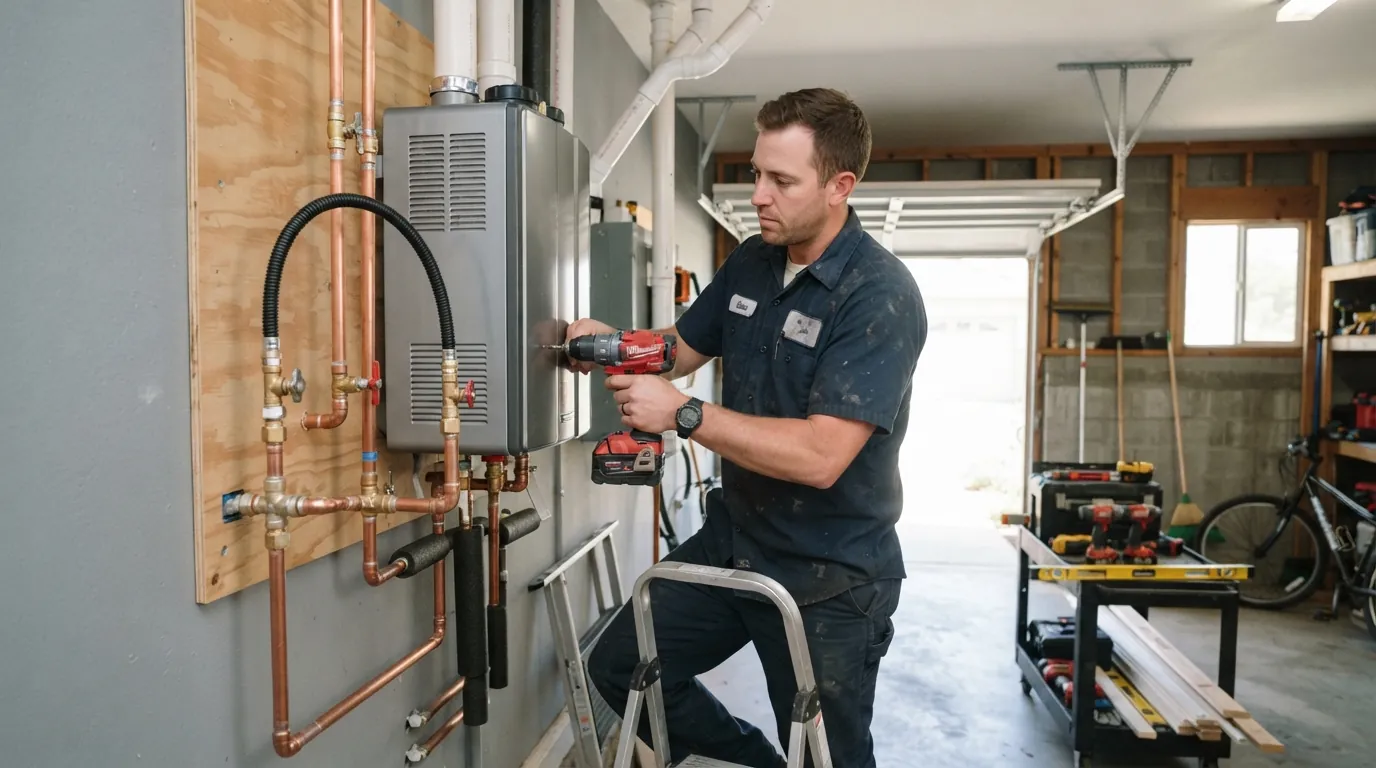
Perfect Tankless Plumbing, San Jose, CA
A water pressure regulator in San Jose sits where the main line enters the house and holds household pressure in a normal range; when it fails, pressure climbs, so we test static pressure and creep at a hose bib, then adjust or replace the valve and check the expansion tank on the water heater.
Updated September 2026
Repipe, Gas & Water Quality
What a pressure regulator does
Street pressure varies and can be far higher than household plumbing is designed for. A pressure reducing valve, or PRV, drops it to a steady level before water reaches your fixtures. Like any valve with a spring and diaphragm, it wears out.
When it fails, the symptoms spread through the house: banging pipes, running toilets, dripping relief valves and supply lines that burst early. Replacing it protects everything downstream.
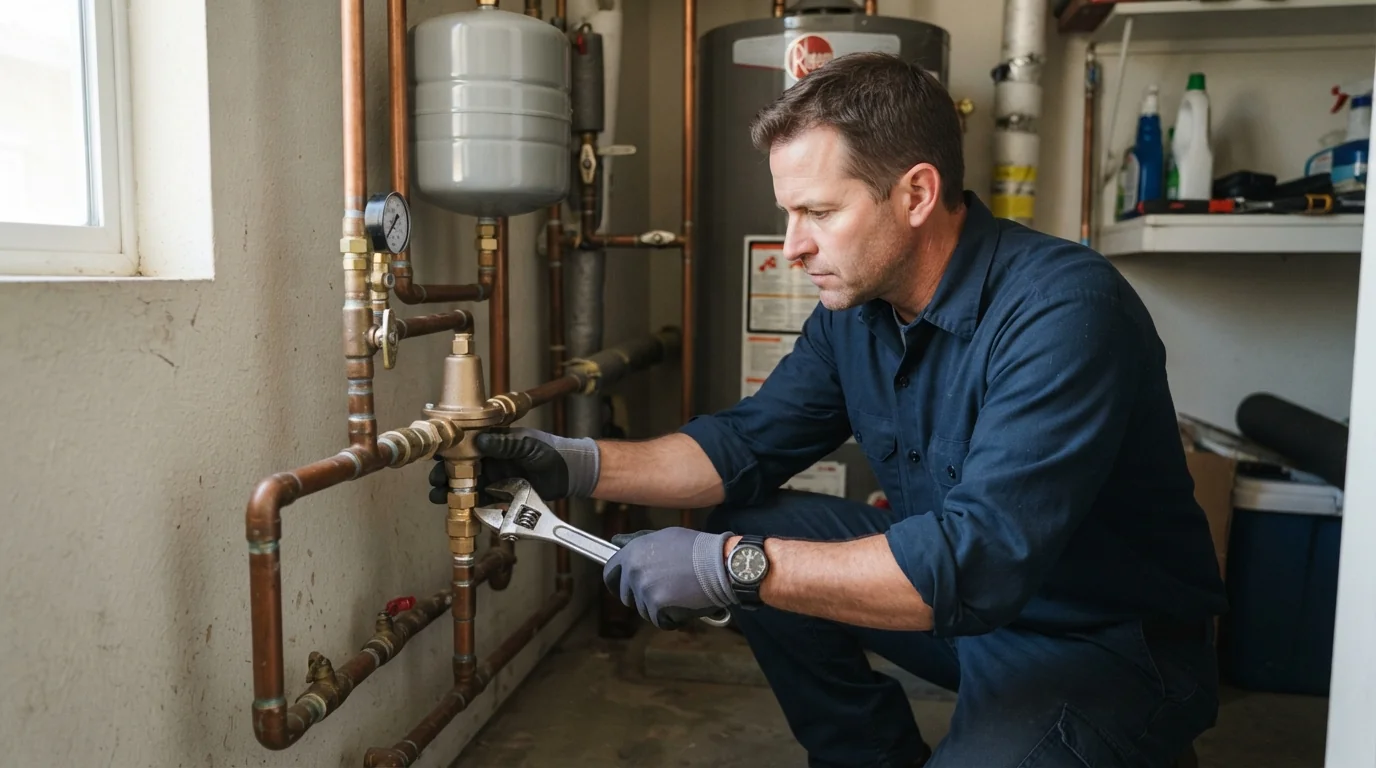
Cost factors
What affects regulator replacement cost
We do not publish a local price for regulator work; the valve size and access set it.
- Line size. larger mains need larger valves
- Location. a buried box or tight crawl space takes longer
- Unions and shutoff. added for future servicing
- Expansion tank. checked, recharged or added
- Pipe condition. old galvanized at the valve may need replacing
- Pressure-related repairs. fill valves or relief valves damaged by high pressure
DIY or call
Pressure checks you can do yourself
| Task | Reasonable to DIY | Call a plumber |
|---|---|---|
| Testing pressure with a gauge | Yes, at a hose bib | If the reading is high |
| Adjusting the PRV screw | Small tweaks only | If it will not hold |
| Replacing a PRV | No | Always |
| Checking the expansion tank | Tapping it | Recharging or replacing |
| Replacing a relief valve | No | Always |
| Cleaning aerators | Yes | Not needed |
High pressure symptoms
The signs of high pressure show up in several places at once. Faucets spit and bang when shut off, toilets refill on their own as pressure forces past the fill valve, the water heater relief valve drips, and washing machine hoses fail early. A gauge on an outside hose bib settles it in a few minutes: we read static pressure, then watch whether it climbs with everything off, which points to a regulator that is no longer holding its setting and needs attention before anything else downstream fails.
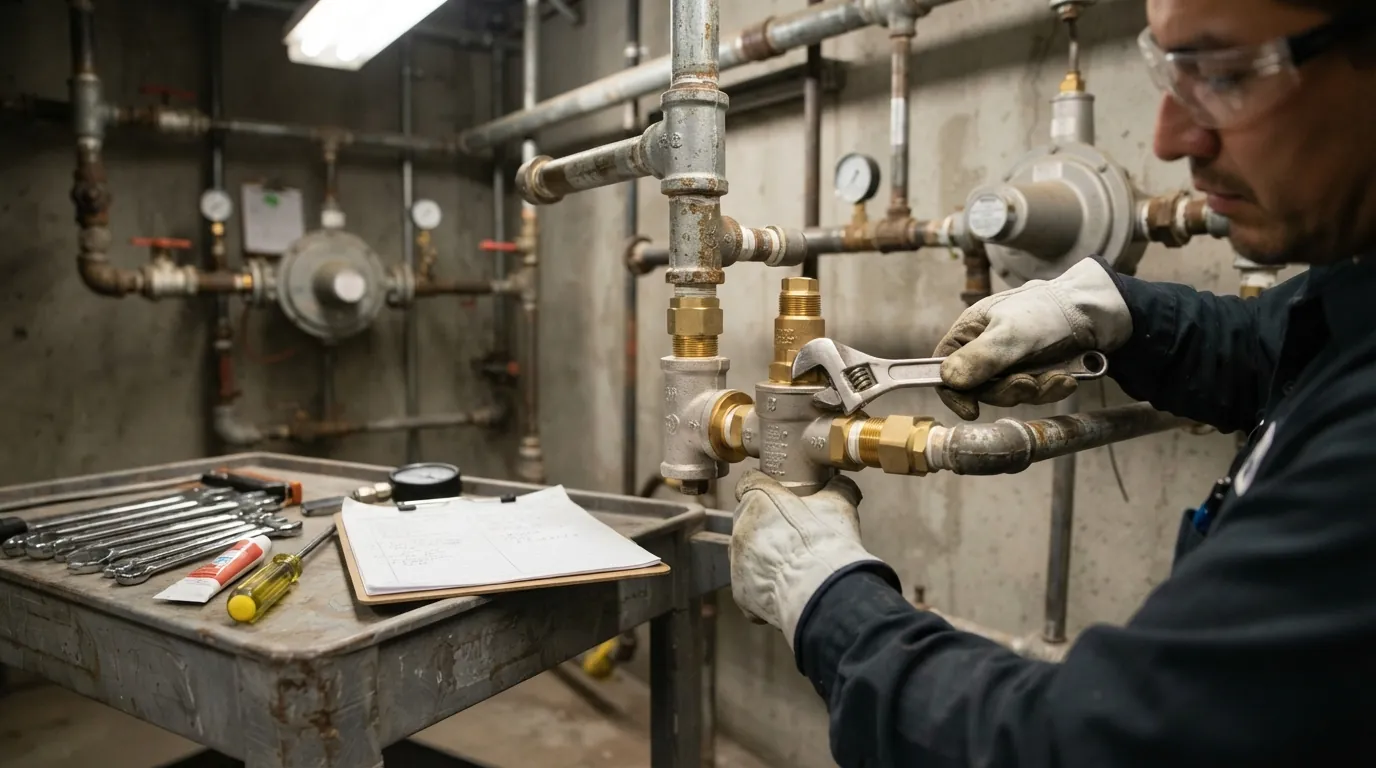
PRV sizing
Regulators are sized to the main line and the house's flow demand. Too small and upstairs showers lose pressure when two fixtures run; too large and the valve can chatter. We match the new valve to the line size, set it to a sensible pressure for the house, and install unions so it can be serviced later without cutting pipe. Where the old valve is buried in a box, we clear the box and set the new valve so it stays reachable for the next adjustment or service.
Expansion tank pairing
A regulator acts like a one-way valve, so water heated in the tank has nowhere to expand. Without an expansion tank, pressure spikes every time the heater runs and the relief valve drips. When we replace a regulator on any San Jose home, we check the expansion tank's charge and condition, and fit one if the heater has none. Leaving it out is a common reason new regulators get blamed for dripping relief valves and banging pipes that they did not actually cause.
Local context
Aging regulators in San Jose's 1970s housing
In a city whose median home was built in 1978, the pressure regulator at the main in many houses is either original or has not been checked since the house last sold. A regulator does not announce that it has failed; the house just starts showing high-pressure symptoms one fixture at a time. That is why we put a gauge on the hose bib during almost any repair call on a home of that age.
How the job runs
How a regulator replacement runs
- 1
Test pressure
Static reading and creep at a hose bib.
- 2
Find the valve
At the main entry or in a box.
- 3
Shut off at the meter
Isolate the main line.
- 4
Replace the valve
Sized to the line, with unions.
- 5
Set the pressure
To a sensible level for the house.
- 6
Check the heater
Expansion tank and relief valve.
Warning signs
Signs your pressure regulator has failed
- Banging pipesWater hammer when taps close.
- Relief valve drippingPressure spikes at the heater.
- Toilets refillingPressure forcing past the fill valve.
- Spitting faucetsToo much pressure at the aerator.
- Burst supply linesHoses and lines failing early.
- Pressure that changesStrong one hour, weak the next.
FAQ
Pressure Regulator Replacement questions from San Jose homeowners
A hose bib gauge gives a reading in minutes. Banging pipes and dripping relief valves are the common signs.
Sometimes. If it won't hold a setting, the diaphragm or spring has failed and it needs replacing.
A regulator stops heated water expanding back into the street, so the tank absorbs it instead.
Usually where the main line enters the house or in a box near the front hose bib.
Yes. Repeated pressure spikes stress the tank and fittings and make the relief valve drip.
Same family
Related work in repipe, gas & water quality
Water Pressure Booster Pump Installation
Upstairs and hillside pressure, Constant-pressure pump sizing.
Read about water pressure booster pump installationADU and Garage Conversion Plumbing
Sewer tie-in or new lateral, Water and gas service to the unit.
ADU and Garage Conversion PlumbingGas Line Installation and Repair
Gas leak repair, New appliance stub.
Read about gas line installation and repairLow Water Pressure Repair
Galvanized restriction, PRV failure.
Galvanized restriction and related workSeismic Gas Shutoff Valve Installation
Earthquake valve at the meter, Excess flow valves.
Earthquake valve at the meter and related work
One number, any hour
Get your water pressure checked
Call and we will test your pressure and replace the regulator if it has failed.