Signs your galvanized pipes are failing, and what to do about it
Galvanized steel was the standard supply pipe for decades. In many San Jose houses it is now older than its expected life.
- 4 min read
- San Jose focus
- Sept 2026 updated
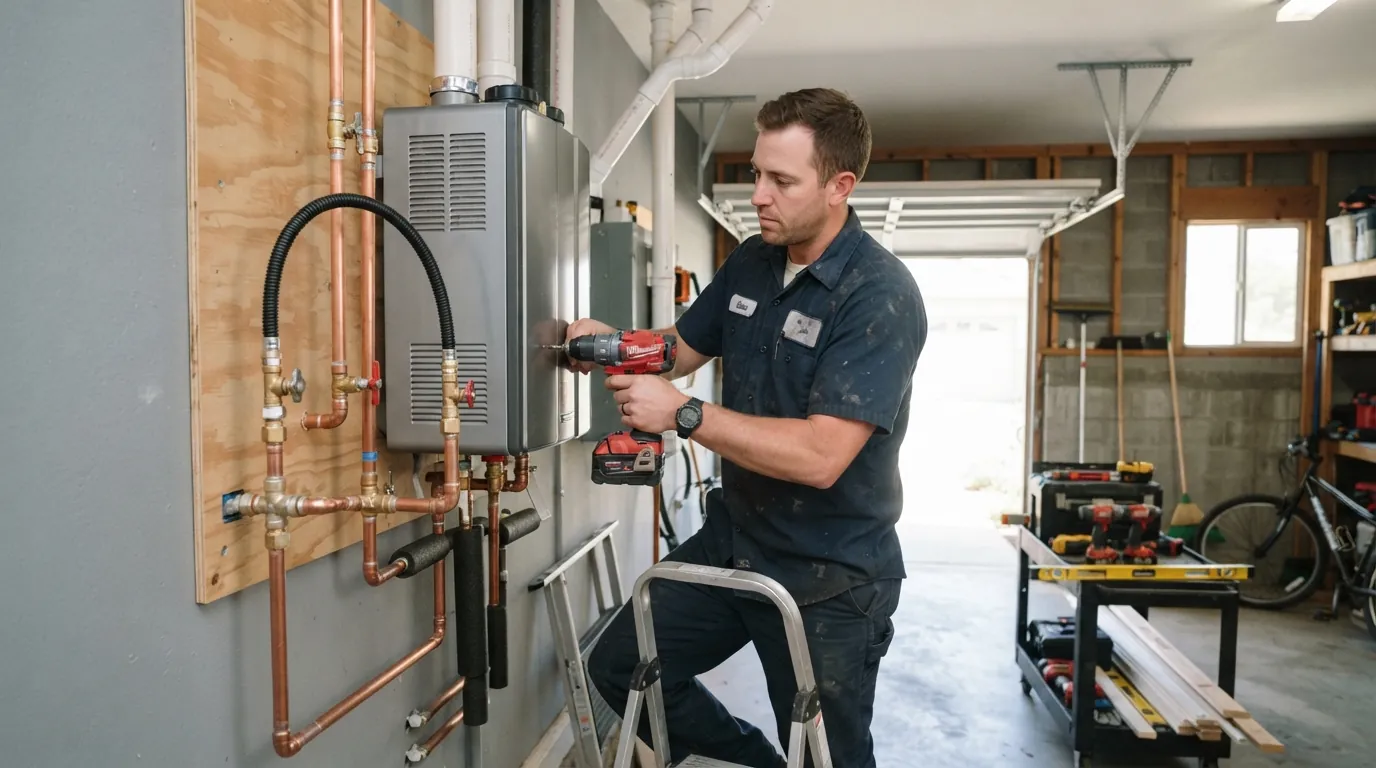
Perfect Tankless Plumbing, San Jose, CA
Galvanized pipes are failing when you see rusty or brown water after the taps sit, falling pressure at several fixtures, leaks at threaded joints, or pinholes appearing in different places; in San Jose, much of the housing from before 1980 still has original galvanized or early copper supply lines past a 50 to 70 year life.
Why galvanized pipe fails
Galvanized pipe is steel coated in zinc. The zinc slows corrosion for a few decades, then wears away, and the steel starts rusting from the inside. Rust and mineral scale build up on the inner wall, the opening narrows, and the pipe wall thins until it leaks. Threaded joints fail first, because cutting the threads removed metal and the joint is already the thinnest point.
The failure is gradual, which is why owners often live with the symptoms for years. By the time a leak appears, the rest of the line has usually aged the same way.
How old the pipes around San Jose are
Most of San Jose's single-family homes were built between 1950 and 1975, and galvanized steel from that era typically lasts 50 to 70 years. Even copper from the 1960s can develop pinholes after decades of Bay Area water chemistry. In Willow Glen, Rose Garden and Naglee Park, much of the housing predates 1950, and a lot of it still runs original galvanized supply lines now more than 70 years old.
Across Santa Clara County, the oldest residential plumbing sits in San Jose, Santa Clara, Sunnyvale, Mountain View and Campbell, which grew fast in the 1950s and 1960s. If your house dates from then and has never been repiped, it is worth knowing what is in the walls.
The warning signs
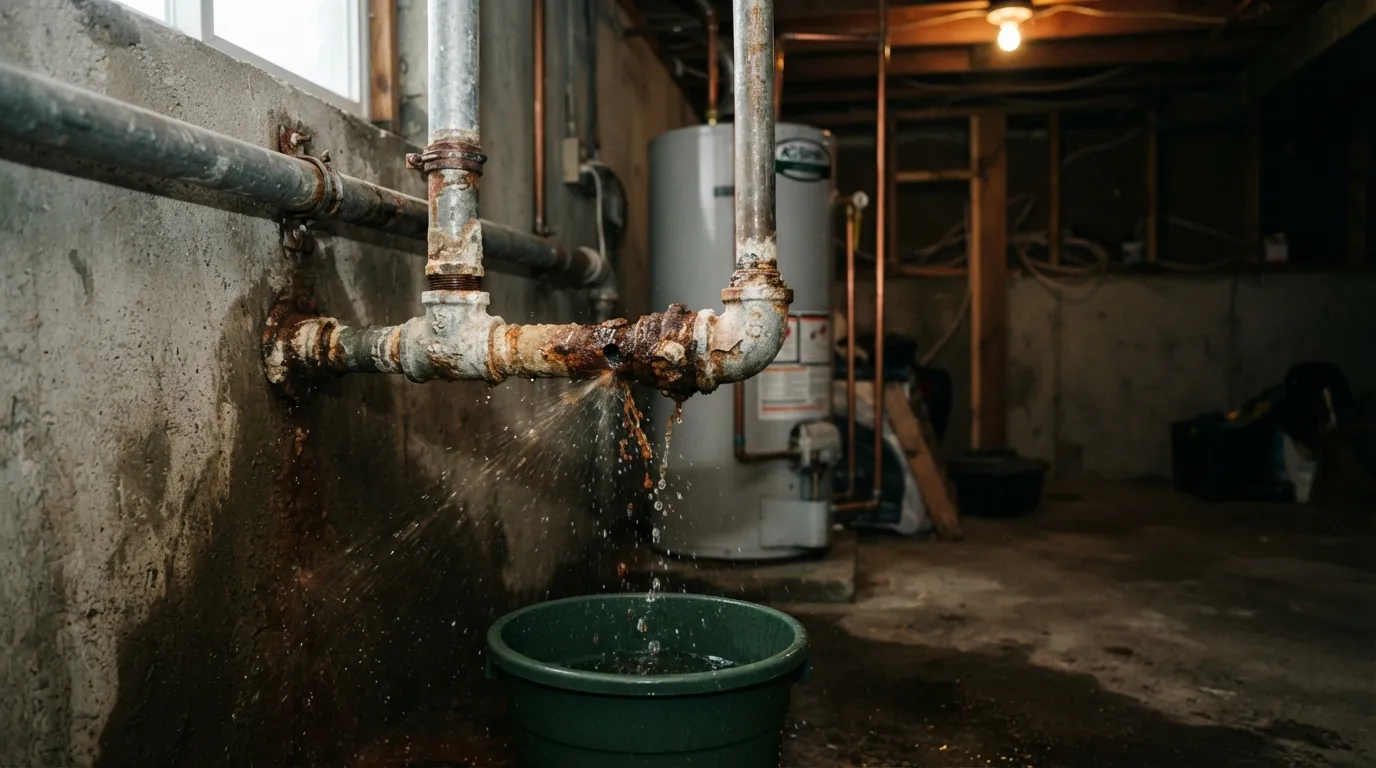
Rusty or brown water that clears after the tap runs is rust coming off the inside of the pipe. Pressure that has slowly fallen, especially at upstairs fixtures or when two taps run, is scale narrowing the pipe. Leaks at threaded joints, or pinholes that appear in different parts of the house over a year or two, mean the wall is thinning throughout. A water heater that fills with rust flakes, or aerators that clog with grit, are further clues.
One sign on its own is not proof. Several together, in a house of the right age, usually are.
| Sign | What it usually means | Next step |
|---|---|---|
| Rusty water after sitting | Rust inside the pipe | Check the pipe material |
| Falling pressure | Scale narrowing the pipe | Pressure and flow test |
| Leaks at threaded joints | Thinning at the threads | Inspect removed pipe |
| Pinholes in different places | System-wide thinning | Plan a repipe |
| Grit in aerators | Scale breaking loose | Clean and inspect |
| Stiff or seized stop valves | Corrosion at fittings | Replace when accessible |
Seeing rusty water or weak pressure? Call and we will check what your supply pipe is made of and how it looks inside.
Call (669) 281-0871How to check your own house
Look where the supply pipe is exposed: at the water heater, under sinks, in the crawl space or where the line enters the house. Galvanized is dull gray steel with threaded joints; a magnet sticks to it. Copper is reddish and soldered; a magnet does not stick. PEX is flexible plastic tubing, usually red, blue or white.
Many houses have a mix: galvanized in the walls, copper or PEX where earlier repairs were made. Renovated homes in older neighborhoods often have exactly that, with each section aging at a different rate. A plumbing inspection maps it room by room.
Repair or repipe
A single leak on otherwise sound pipe is a repair. When the removed section is heavily scaled inside, pressure is falling across the house, and leaks keep appearing, patching becomes the more expensive path over a few years. Published 2026 figures put a whole-house PEX repipe on a 2,000 square foot San Jose home at roughly $7,500 to $14,000; county-wide figures run about $4,200 to $16,100 for PEX-A and $5,500 to $21,000 for copper, with slab foundations adding cost.
A repipe usually takes two to four days, with water restored most evenings. It is permitted and inspected, and it ends the cycle rather than moving the next leak a few feet along the line.
From the guide to the job
Services related to this guide
Whole-House Repiping
PEX repipe, Copper repipe.
Whole-House Repiping in San JoseLow Water Pressure Repair
Galvanized restriction, PRV failure.
Read about low water pressure repairPlumbing Inspection
Pre-purchase inspection, Annual whole-home check.
Plumbing Inspection in San Jose
FAQ
Questions readers ask about this
Typically 50 to 70 years. Many San Jose homes are at or past that range.
No. Scale and rust inside galvanized cannot be removed effectively; the pipe is replaced.
It is mostly rust, but it signals corrosion. Have the supply checked and consider testing if you are concerned.
Not always. If only some branches are galvanized, those can be replaced. We map the materials first.
Usually two to four days, with water back on most evenings.
More guides
Keep reading
Pipe Burst in San Jose? What to Do in the First 10 Minutes
The first ten minutes, in order: shutoffs, power, drainage and what to photograph.
When a pipe bursts, explainedHow to Choose a Plumber in San Jose: 7 Questions to Ask
Seven practical questions that separate a complete quote from a vague one.
How to Choose a Plumber in San Jose: 7 Questions to Ask
One number, any hour
Find out what is in your walls
Call to book an inspection of your supply pipe. We will tell you whether a repipe is due or years away.