What San Jose's hard water does to your water heater
The water here is hard enough to change how long a heater lasts. A little routine maintenance changes it back.
- 4 min read
- San Jose focus
- Sept 2026 updated
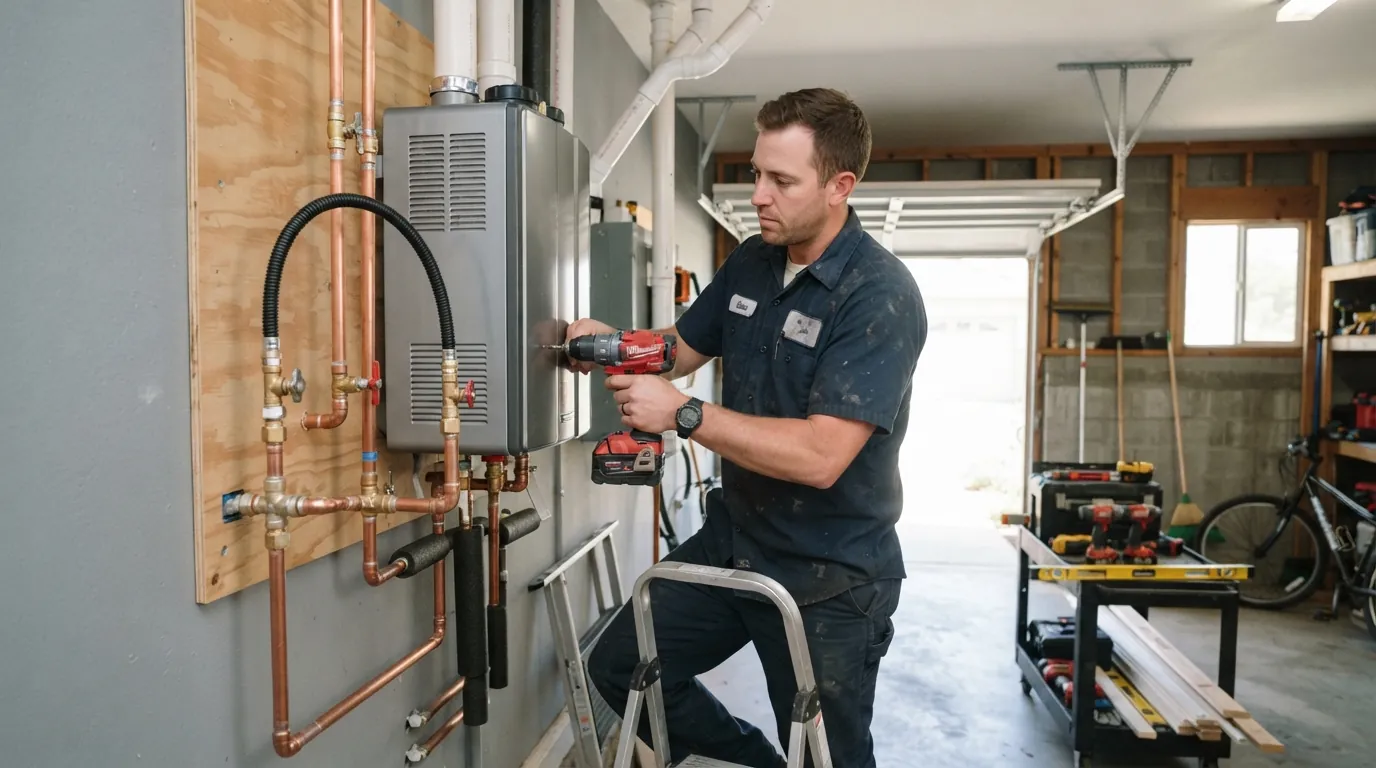
Perfect Tankless Plumbing, San Jose, CA
San Jose Water Company data puts groundwater on most of the valley floor at roughly 11 to 26 grains per gallon, well above the 7 grains that counts as hard; that mineral load settles as sediment in tank heaters and scale in tankless units, so regular flushing, anode checks and often a softener extend a heater's life here.
How hard the water is
San Jose Water Company treats anything above 7 grains per gallon, or 120 parts per million, as hard water. Its own data for groundwater serving most of the valley floor runs roughly 11 to 26 grains per gallon, and imported surface water reaching parts of the system is softer, about 4.5 to 9. Published guidance on the city's water puts the typical range at 10 to 16 grains depending on the season and the blend.
In practice, most San Jose homes receive hard to very hard water, and the exact figure at your tap depends on the blend that reaches your street. A simple hardness test at the kitchen sink tells you where you stand.
What it does to a tank heater
When water is heated, the dissolved calcium and magnesium drop out. In a tank, they settle on the bottom as sediment. That layer insulates the water from the burner, so the heater works harder, overheats the tank bottom, and makes a popping or rumbling noise as trapped water boils under it. Local plumbers report tanks here often needing replacement years earlier than their rated life.
The anode rod, a sacrificial metal rod that corrodes so the steel tank does not, also wears faster in these conditions. Once it is gone, the tank starts to rust, and a rusting tank ends in a leak that cannot be repaired.
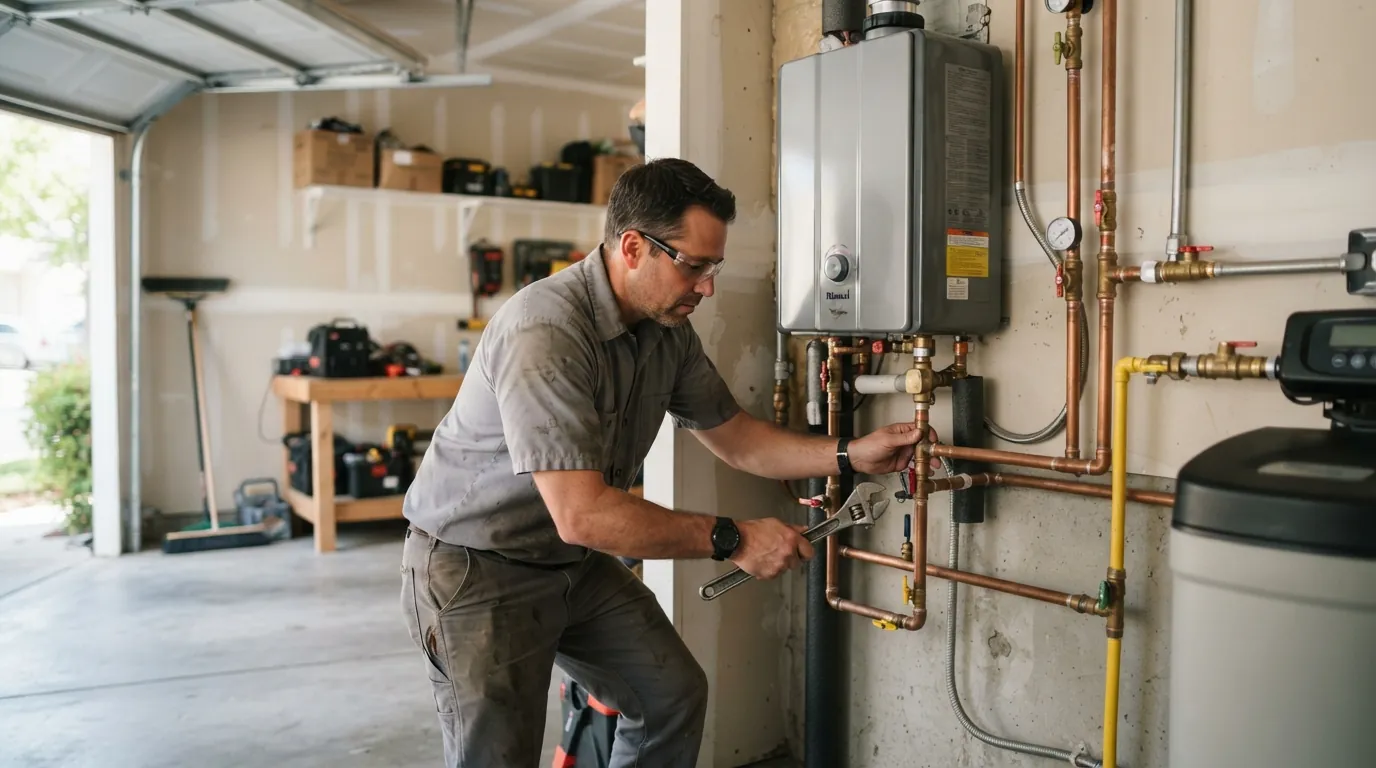
Heater popping or losing hot water? Call and we will flush it and check the anode while we are there.
Call (669) 281-0871What it does to a tankless unit
A tankless unit has no tank for sediment, but it heats water inside a narrow heat exchanger, and that is where scale forms. Scale reduces heat transfer and narrows the passages, so the unit delivers less hot water, swings in temperature, and eventually shows a scale or overheat error. The flow sensor and inlet filter collect scale too.
None of this means tankless is a poor fit for San Jose. It means the annual descaling flush is part of owning one here.
| Tank heater | Tankless heater | |
|---|---|---|
| Where minerals go | Sediment on the tank bottom | Scale in the heat exchanger |
| Early symptom | Popping or rumbling | Lukewarm water or swings |
| Part that wears | Anode rod | Flow sensor and filter |
| Routine care | Flush and anode check | Annual descaling |
| Helps most | Softener upstream | Softener upstream |
| Warning sign of the end | Rust or a leaking tank | Heat exchanger failure |
Maintenance that actually helps
For tanks, a periodic flush removes loose sediment, and checking the anode rod every two to three years, a frequency local plumbers suggest for Santa Clara County water, lets you replace it before the tank is left unprotected. Both are short jobs compared with a new heater.
For tankless units, descaling through the isolation valves once a year is a sensible baseline, along with cleaning the cold inlet filter. If the unit lacks service valves, fitting them is a one-time cost that makes every later flush quick.
When a softener is worth it
A salt-based softener removes hardness before it reaches the heater, which slows sediment and scale dramatically and helps fixtures and glass too. It needs space near the main line, a drain and an outlet. A salt-free conditioner reduces scale formation without removing hardness and suits homes where a drain or salt is a problem.
If you have a tankless unit, or a tank that keeps failing early, a softener is usually the most effective single step. San Jose also disinfects with chloramine, so if you want a filter as well, it needs catalytic carbon rather than standard carbon.
From the guide to the job
Services related to this guide
Water Softener Installation
Salt-based softener, Salt-free conditioner.
Salt-based softener and related workExpansion Tank and Anode Rod Service
Anode rod replacement, Expansion tank install.
Expansion Tank and Anode Rod ServiceTankless Descaling and Flush
Isolation valve retrofit, Inlet filter cleaning.
How we handle tankless descaling and flush
FAQ
Questions readers ask about this
San Jose Water Company data puts valley-floor groundwater at roughly 11 to 26 grains per gallon; anything above 7 counts as hard.
Sediment on the tank bottom, with water trapped under it boiling as the burner fires. A flush often quiets it.
Local plumbers suggest every two to three years here because of the hard water.
It reduces it a lot, but an occasional flush and inspection is still worthwhile.
Usually not. A descaling flush restores most units if it is done before the heat exchanger is damaged.
More guides
Keep reading
How Often to Flush a Tankless Water Heater in San Jose
Descaling intervals for local water, what the flush involves and the signs it is overdue.
How Often to Flush a Tankless Water Heater in San JoseWater Softener or Conditioner for San Jose Water?
How each works on local water, and where a chloramine filter fits in.
Water Softener or Conditioner for San Jose Water?
One number, any hour
Protect your heater from the water
Call to book a flush, an anode check or a hardness test and softener sizing.