Softener or conditioner: treating San Jose's hard water
Both protect your plumbing from scale. Only one actually softens the water.
- 4 min read
- San Jose focus
- Sept 2026 updated
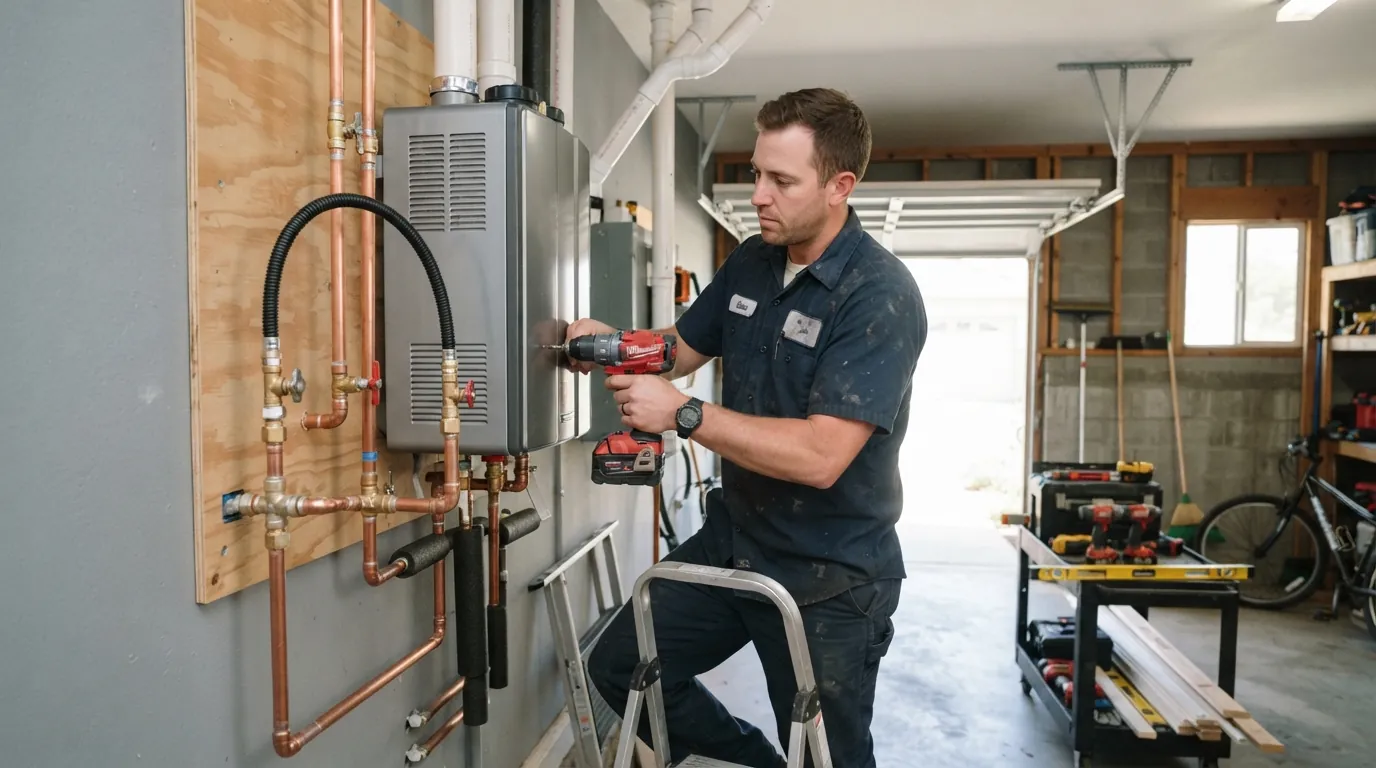
Perfect Tankless Plumbing, San Jose, CA
For San Jose water, which San Jose Water Company data puts at roughly 11 to 26 grains per gallon on much of the valley floor, a salt-based softener removes the hardness and gives the most protection to heaters and fixtures, while a salt-free conditioner reduces scale without removing minerals and suits homes where a drain or salt use is a problem.
How hard the water is
San Jose Water Company counts anything above 7 grains per gallon as hard. Its data for groundwater serving most of the valley floor runs roughly 11 to 26, and imported surface water reaching parts of the system is softer. The white film on showerheads and glass is the residue of that hardness, left when water heats or evaporates.
Because the blend varies by street and season, the first step is a hardness test at your own tap.
How a salt-based softener works
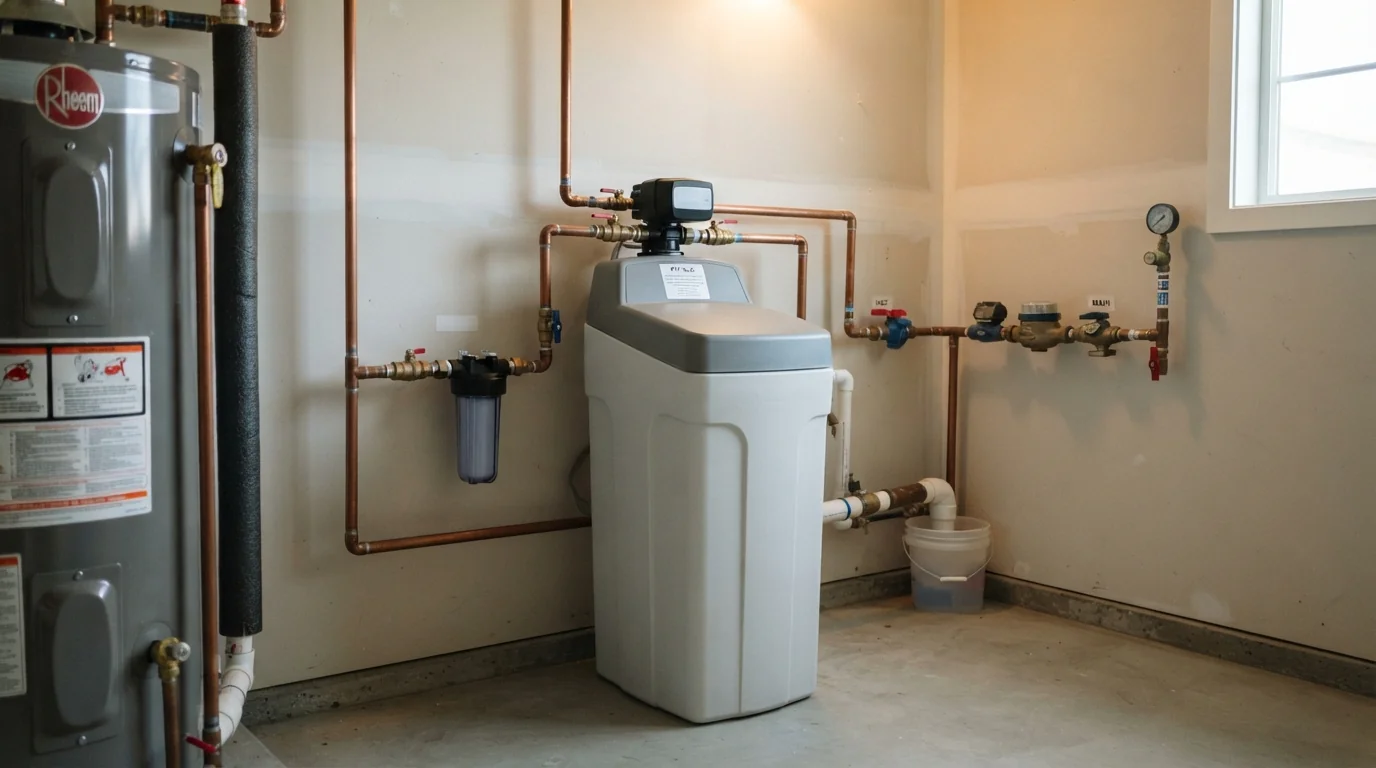
A softener passes water through resin beads that swap calcium and magnesium for sodium or potassium. The water leaving it is soft: no scale in the heater, no film on glass, and soap lathers easily. Periodically the resin is regenerated with brine from a salt tank, and that rinse water goes to a drain.
It needs a spot near the main line, a drain for regeneration with an air gap, an outlet for the control head, and someone to top up the salt. Many owners keep a hard-water hose bib for the garden.
How a salt-free conditioner works
Most salt-free conditioners use template-assisted crystallization: the media turns dissolved hardness into tiny crystals that stay suspended in the water instead of sticking to hot surfaces. Scale in heaters and on fixtures drops, but the minerals are still there, so the water does not feel softened and glass still spots.
It needs no drain, no salt and no electricity, which makes placement easy.
| Salt-based softener | Salt-free conditioner | |
|---|---|---|
| Removes hardness | Yes | No |
| Protects heaters from scale | Strongly | Moderately |
| Spots on glass | Largely gone | Still present |
| Needs a drain | Yes | No |
| Needs salt | Yes | No |
| Best for | Maximum protection, tankless owners | No drain access, sodium concerns |
Not sure which one your house needs? Call and we will test your hardness first.
Call (669) 281-0871Which one suits which house
If you own a tankless water heater, have a tank that keeps failing early, or simply want the full effect of soft water, a salt-based softener is usually the right choice. If there is no practical drain near the main, someone in the house is watching sodium intake, or the main goal is modest scale reduction, a conditioner is a reasonable alternative.
Either way, size matters. A softener is sized from your hardness and household water use, so it regenerates every few days rather than every night.
Where a filter fits
Neither a softener nor a conditioner removes the disinfectant. San Jose uses chloramine, which ordinary activated carbon handles poorly; catalytic carbon is needed. If you want better-tasting water throughout the house, a whole-house catalytic carbon filter can sit alongside the softener. For drinking water only, a reverse osmosis system at the kitchen sink is the usual choice.
From the guide to the job
Services related to this guide
Water Softener Installation
Salt-based softener, Salt-free conditioner.
Water Softener Installation in San JoseWater Filtration Systems
Whole-house carbon, Reverse osmosis at the sink.
Read about water filtration systemsTankless Descaling and Flush
Isolation valve retrofit, Inlet filter cleaning.
Tankless Descaling and Flush in San Jose
FAQ
Questions readers ask about this
Most homes receive hard to very hard water. A hardness test at your tap tells you where you stand.
They reduce scale on hot surfaces but do not remove hardness.
Yes, strongly. It slows scale on the heat exchanger and stretches the descaling interval.
Yes. A hose bib or irrigation line can stay on the hard side.
Only if you want chloramine and taste removed. That needs catalytic carbon or reverse osmosis.
More guides
Keep reading
Hard Water and Your Water Heater in San Jose, CA
What the local hardness numbers mean for tanks and tankless units, and what helps.
Our hard water and heaters guideHow Often to Flush a Tankless Water Heater in San Jose
Descaling intervals for local water, what the flush involves and the signs it is overdue.
Our how often to flush tankless guide
One number, any hour
Test your water and choose the right system
Call to book a hardness test and a recommendation sized to your household.